Concrete Roof Tile Life Expectancy: Key Facts and Maintenance
By Sunrise Roofers LLC · Dec 9, 2025 · 13-21 min read
Somebody tells you a concrete tile roof lasts 50 years or more and your eyebrows go up. Fair enough. The number's real, too. The tiles themselves are brutally tough, and plenty of them outlive the people who paid for them.
But the tiles are only half the story. What actually decides how long your roof holds up is the whole system pulling together—and most of all the underlayment hiding under those tiles. That layer? Much shorter fuse.
Understanding Your Roof as a Complete System
Calling your roof "the tiles" is like calling a car "the body panels." The frame might outlast you. But it's the tires and the belts and the fluids that keep you on the road, and nobody thinks about those until one of them quits.
Roofs are no different. The concrete tiles are the tough, visible shield that takes the sun and the rain. Underneath them sits the underlayment—a waterproof membrane that's the real barrier between water and your living room. That's the part doing the quiet work nobody sees.
And while the tiles look fine from the curb for decades, that underlayment is getting cooked by attic heat the whole time. It stiffens up. It cracks. Eventually it gives out. We'd put money on it: that's the number one reason a tile roof starts leaking while the tiles still look brand new.
The Lifespan of Each Component
A roof is only as good as its weakest part. From the street you see those durable tiles, but any roofer who's been doing this a while will tell you the hidden stuff is what decides when you're writing a check. Knowing roughly how long each piece lasts lets you plan ahead instead of getting blindsided.
Here's why the underlayment earns your attention way before the tiles do.
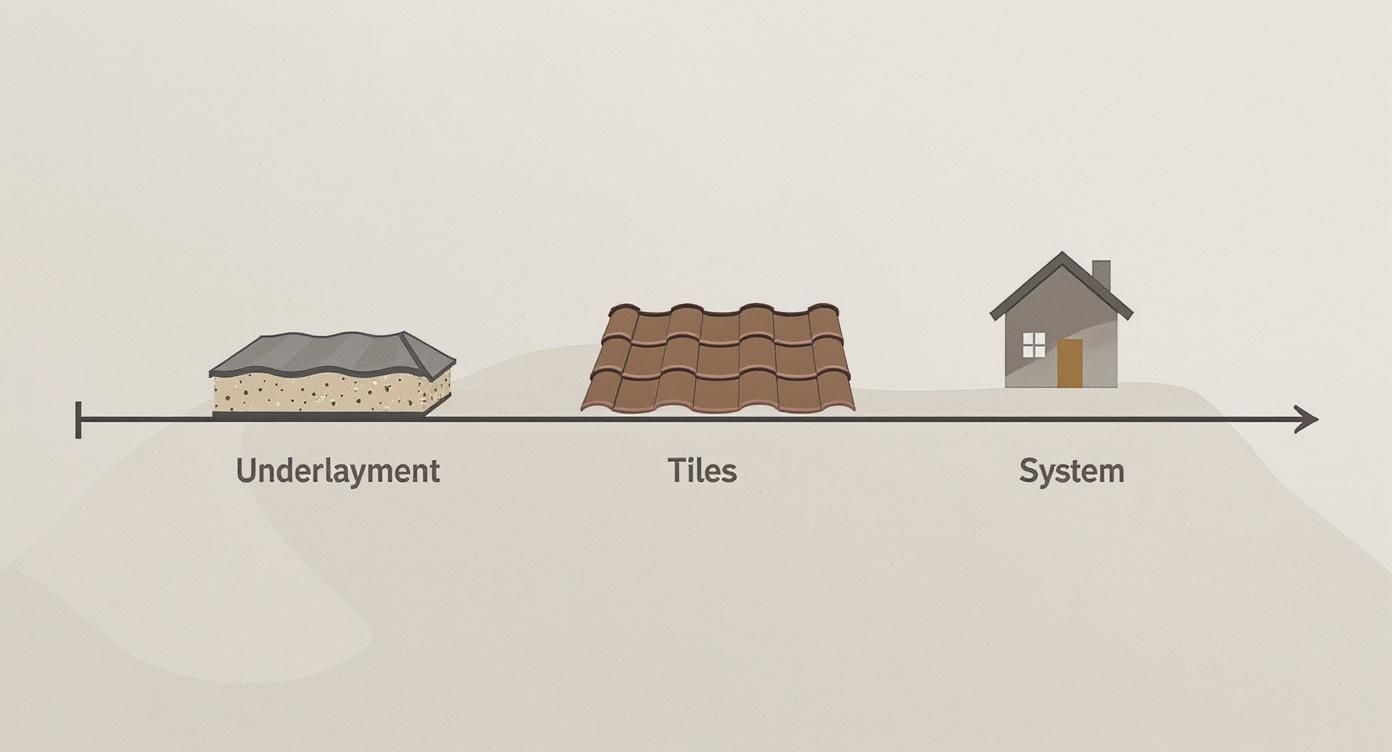
The table below lays out what you can typically expect from each part of a concrete tile system.
| Concrete Roof System Component Lifespan | |
|---|---|
| Roofing Component | Typical Life Expectancy |
| Concrete Tiles | 50+ years |
| Underlayment (Felt/Synthetic) | 20–40 years |
| Flashings | 20–30 years |
| Battens (Wood Strips) | 20–40 years |
| Fasteners (Nails/Screws) | Varies (depends on material) |
See the pattern? The underlayment is what comes due first. Plan on a full replacement every 20 to 40 years if you want the whole roof staying watertight.
Bottom line: concrete tiles routinely go 50 to 100 years, which puts them near the top for durability. The underlayment under them, though, usually needs swapping every 20 to 40 years. Ignore that hidden layer and you get leaks—even with tiles that look perfectly fine from the ground.
Manage the whole system and you get your money's worth. Our guide to residential roofing in Tucson walks through what our desert climate specifically does to these roofs. Watch the whole thing, not just the tiles you can see, and your home stays protected for decades.
Critical Factors That Influence Roof Longevity
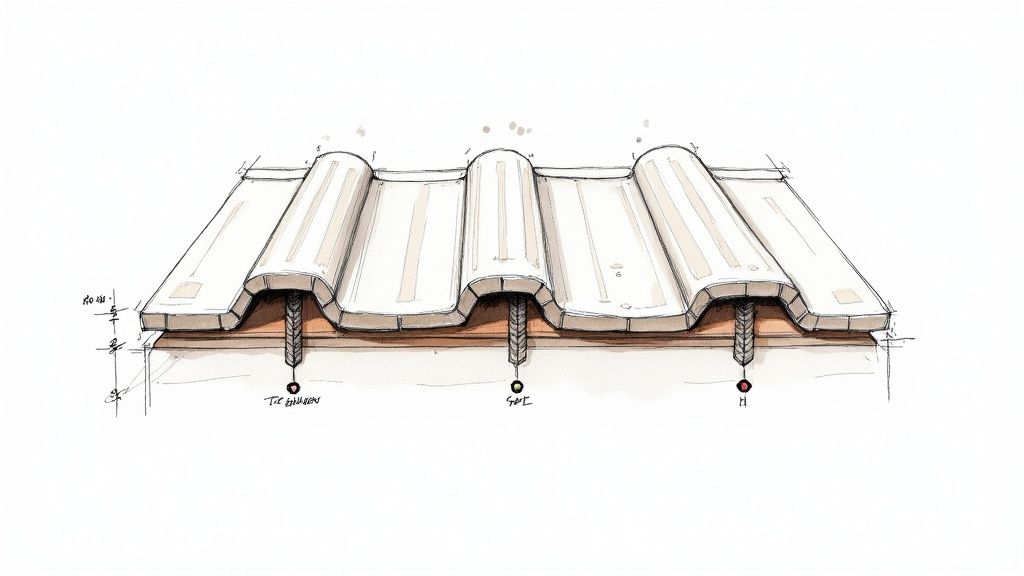 That 50-year number is the industry benchmark for concrete tiles. It is not a promise. Whether a roof runs for decades or quits early comes down to a short list of things, and once you know them, you're the one calling the shots on your roof.
Treat the 50-year figure as the ceiling—the best you can hope for. A few things push your roof toward it, and a few others cut it short. They all feed into each other, so one weak spot can drag the rest down with it.
From the day the tiles get poured to the day the last fastener goes in, quality is the whole ballgame.
Quality of Materials and Manufacturing
Not every concrete tile is the same. Not even close. It starts with the mix—the blend of sand, cement, water, and pigment. A good plant cures every tile properly, and you end up with something dense and tight that shrugs off water and resists cracking.
Cheaper tiles? They come out uneven, sometimes with little air pockets baked in. You can't see those flaws, but they're why a bargain tile fractures from a hailstone or the wild temperature swings we get out here in Tucson. A well-made tile is what a long roof is built on.
The Importance of Professional Installation
You can buy the best tiles money can buy and still end up with a bad roof if they go on wrong. Installation is a real craft. It touches everything—how the roof sheds water, how it holds up to wind, all of it. Honestly, it's probably the biggest single factor in how long your roof actually lives.
A good crew makes sure:
- The underlayment goes down clean: No bubbles, no tears, no sloppy overlaps that basically hold the door open for water.
- Flashing is done right: The metal around chimneys, vents, and valleys is where roofs leak first if it isn't sealed with care.
- Tiles are fastened to code: That's what keeps them from sliding or getting torn off in high wind—and during a Tucson monsoon, that matters a lot.
- Battens are spaced and secured right: These wood strips are the skeleton everything hangs on, so they keep the tiles aligned and steady.
A crew that knows what it's doing isn't just stacking tiles—they're building one weatherproof system that works as a whole. Cut corners on the install and you've found the fastest way to shorten your concrete roof tile life expectancy. We've seen those jobs come back for pricey repairs inside a couple of years.
Climate and Maintenance
Your climate never stops testing your roof. Out here, the UV bakes everything up top all year long, then the monsoon shows up and dumps water on every seam and seal in minutes. Put those two together and the lesson is plain: you want a roof built for what Tucson actually does, not some generic spec.
This is where staying ahead of it pays off. A quick look a couple times a year catches the small stuff—one cracked tile, debris piling up in a valley—before it turns into water in your attic. Regular check-ups and a little cleaning keep the roof ready for whatever Arizona throws at it next.
How the Arizona Climate Challenges Your Roof
In Tucson a roof isn't just part of the house—it's the thing standing between your family and one of the harshest climates in the country. The Sonoran Desert is gorgeous. It's also picking a fight with your home every single day, and that fight is what eats into your concrete roof tile life expectancy.
None of it is gentle. It's a daily beating, and a generic roof slapped on the way it'd be done anywhere else just can't take it. Blistering sun, then violent storms—your roof never gets a break.
The Relentless Sun and UV Radiation
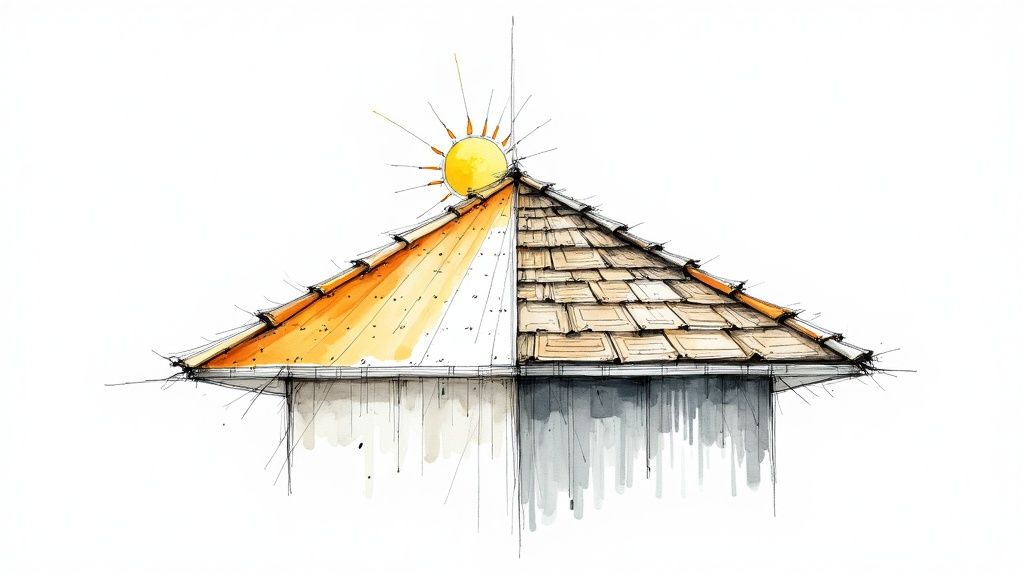
The sun is the worst thing a Tucson roof deals with. Year-round, high-intensity UV is murder on roofing materials, and the underlayment under your tiles takes the brunt of it. Ever leave a newspaper on a dashboard? Goes yellow, gets brittle, crumbles in your hand. Same thing is happening to the most important layer of your roof, just out of sight.
That constant baking does two things:
- It cooks the underlayment: Attic heat slowly bakes the waterproof barrier under your tiles. It stiffens up, turns brittle, and cracks. That's the #1 reason tile roofs fail around here.
- It wears down the tiles: Concrete is tough, but decades of heat cycling makes even the tiles more brittle, so they crack easier from foot traffic or a hard knock.
The desert sun isn't only heat—it's a slow chemical breakdown of the materials up there. An underlayment that'd go 30 years somewhere milder can be done in 20 years or less in Tucson if the roof doesn't breathe right.
The Violence of Monsoon Season
Months of bone-dry heat, and then the monsoon rolls in and makes up for lost time. These storms aren't a sprinkle. They're a sudden, violent gut-check on every piece of your roof at once.
The season hits in a few ugly ways:
- Torrential Rain: A monsoon cell drops a stunning amount of water in minutes. Weak drainage gets swamped, and the water muscles its way into any little gap around flashing or under a cracked tile.
- High Wind Uplift: A hard gust catches the lip of a tile and pries up on it. Tiles that weren't fastened right get loosened—or torn clean off.
- Hail and Debris: Hail's less common, but when it comes it cracks tiles on impact. The wind also packs debris into your valleys, and that dam backs water up until it finds a way in.
These are local problems, and they call for someone who's actually worked on these roofs. You want a roofer who can build for the slow burn of the sun and the sudden shock of a monsoon both. That kind of know-how isn't a bonus here. It's the job.
Want to see how we build for this reality? Take a look at our Tucson roofing services.
Recognizing the Warning Signs of a Failing Roof
A concrete tile roof almost never goes all at once. Way before a brown ring shows up on your ceiling, the roof has been dropping hints that something's off. Learn to read those hints from the ground and you'll catch the small stuff before it turns into an expensive emergency.
Most of the clues are easy to spot once you know what you're after. A quick look a few times a year—especially right after a big monsoon—does a lot to stretch your concrete roof tile life expectancy.
Obvious Signs of Tile Damage
The easy ones to catch are physical damage to the tiles. Even from the yard you can usually pick out the red flags that need dealing with now.
Watch for these:
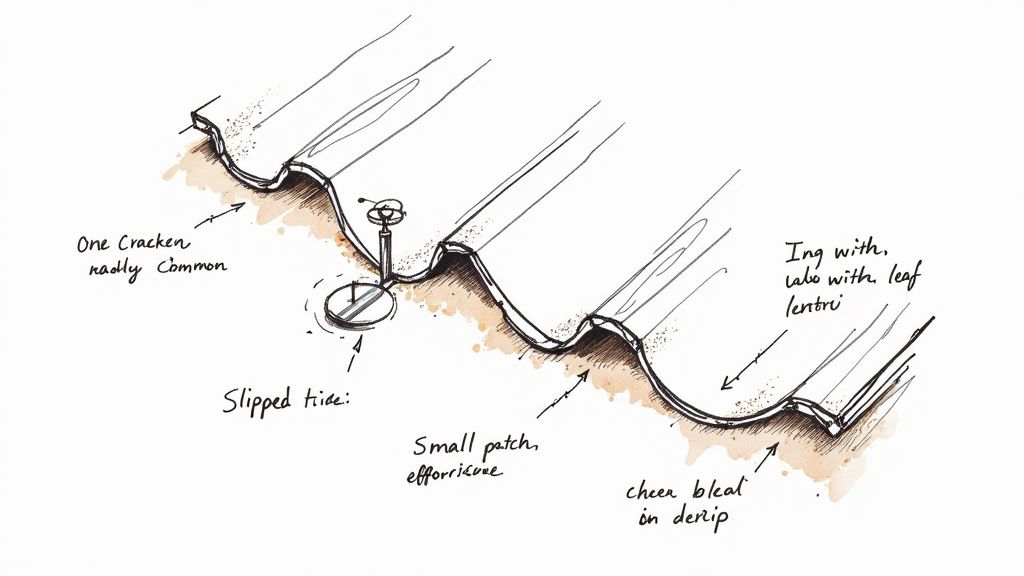
- Cracked or Broken Tiles: A crack is an open door for water—it skips right past the tile's whole job. One broken tile can put a big chunk of roof at risk. Our guide on why fixing broken roof tiles in Arizona is so critical gets into exactly why.
- Slipped or Misaligned Tiles: A tile that's slid out of place leaves the underlayment exposed to sun and rain it was never meant to see. That exposure speeds up the decay of your main water barrier.
- Debris in Valleys: Leaves and dirt piling up where two roof planes meet act like a dam. Water backs up, then seeps under the tiles—right where you don't want it.
Subtle Clues of Deeper Issues
Past the obvious breaks, some signs point to deeper trouble—usually the aging of the stuff under the tiles. They look like nothing. They can mean the parts you can't see are running out of road.
Real-world testing backs this up: the concrete tiles themselves often hold their structural integrity for 60 years or longer. Studies on aged tiles found most still passed water impermeability tests after decades of rough weather. So when you spot signs of failure, it's usually the system letting go—not the tile.
Keep an eye on these quieter symptoms:
- Efflorescence: Chalky white residue on the tile? That's moisture soaking in and then drying out, leaving salt behind. It means the tile's original protective glaze is wearing thin.
- Underlayment Exposure: Spot black paper or membrane peeking out from under a tile? That one's serious. Your main water barrier is now catching UV it was never built to take.
Catch this stuff early and you get to call the shots. A looming disaster turns into a quick, simple repair instead.
Smart Maintenance to Maximize Your Roof's Lifespan
Roof maintenance is easy to write off as one more bill. Look at it differently. It's money that protects your home's value and gets your tile roof closer to that 50-year mark.
Staying ahead just means fixing things before they break, not after. You don't have to be up a ladder every weekend either. You need a simple routine that catches the small stuff before it becomes a big headache.
Your Annual Maintenance Checklist
A steady routine is your best tool, period. Check things over and clean up once a year, and you handle normal wear before it ever reaches the structure underneath.
Here's what we tell folks to do every year:
- Book a Professional Inspection: Don't skip this one. A roofer who knows the work spots things a homeowner won't—early underlayment decay, flashing that's about to go. Here's what our professional roof inspection services cover.
- Clear Debris from Valleys and Gutters: Leaves, dirt, and stray branches hold moisture against your roof like a wet sponge. Let the gutters clog and water backs up under the eaves and starts rotting wood.
- Check Sealant and Flashing You Can See: Look at the sealant around pipes, chimneys, and skylights. Cracking or peeling? You've found a leak waiting to happen, and a couple hundred bucks usually heads it off.
While you're planning, it helps to see what other folks spend on professional cleaning. Numbers like these Phoenix roof pressure cleaning costs give you a ballpark for keeping your tile roof in shape.
Understanding Repair Options
Not every problem means a whole new roof. Knowing when a small fix will do saves you real money. A branch comes down and cracks one tile? That's nothing. A pro swaps it out fast and your roof's whole again.
A "lift and re-lay" is a smart middle path. We pull your existing tiles, lay down brand-new underlayment, then set the same tiles back. That move can buy you another 20-30 years for a fraction of what a full replacement runs.
It's the right call when your tiles are still solid but the underlayment underneath is wearing out. You cash in on the durability of tiles you already paid for, and the whole roof gets a second life.
Making the Call: Repair or Replace Your Concrete Tile Roof?
Repair or replace—it's one of the bigger calls a homeowner makes. You're weighing what you spend now against how you'll sleep later, and the answer really comes down to two things: how old the roof is and what's actually wrong.
A simple repair is the obvious play for a one-off problem on a younger roof. A monsoon branch cracks a few tiles? Wind tears the flashing around a vent? A good roofer fixes that spot and never touches the rest. Quick, cheap, done.
Repairs stop making sense when the trouble is everywhere. If you're chasing leaks, seeing cracked tiles all over, or watching the underlayment give up, you're bailing out a sinking boat. That's when a full replacement is the only honest answer.
When to Repair
Repair is the right move when the damage stays put and the rest of the roof is still in good shape.
Lean toward repair if:
- The damage is in one small spot—say under 10% of the roof surface.
- Your roof is under 20 years old, so the underlayment likely has plenty left in the tank.
- Something specific caused it, like a fallen limb, rather than plain old age.
When to Replace
Replacement is the necessary call when the roof's core is shot. Yes, it costs more up front. But it ends the endless cycle of patch jobs, and that's money well spent.
Concrete tiles are tough as nails. Industry data puts their lifespan at 50 to 100 years, which tells you a lot. So when a roof built from something that durable is failing, that's a loud signal the trouble runs deep and system-wide.
If you think the underlayment is gone, or the damage is everywhere, it's time to look hard at a professional concrete tile roof replacement.
To help you sort it out, here's a quick guide to the scenarios we run into most around Tucson.
Decision Guide: Repair vs. Replace Concrete Tile Roof
| Scenario | Recommended Action | Considerations |
|---|---|---|
| A few cracked or missing tiles from a recent storm | Repair | Quick and cost-effective. Best for younger roofs where the surrounding tiles and underlayment are healthy. |
| Widespread cracking or spalling across 25% or more of the roof | Replace | This signals systemic material failure. Patching will just lead to more repairs down the road. |
| A single, isolated leak around a vent or pipe | Repair | Often a flashing issue. A targeted repair can reseal the penetration and solve the problem for good. |
| Multiple leaks in different areas of the house | Replace | This almost always points to underlayment failure. The tiles aren't the problem; the system is. |
| Underlayment is brittle, torn, or exposed | Replace | The underlayment is your roof's real waterproofing layer. Once it's gone, a full replacement is the only option. |
| Roof is over 30 years old and needs frequent repairs | Replace | The roof has reached the end of its practical service life. A new system offers better value and security. |
It's a guide, not gospel. The only way to know for sure is to have someone get up there and look. And if you land in one of the "replace" boxes, don't panic—a new roof is a big spend, but it's protecting the most expensive thing you own. In a real pinch, an emergency trick like how to fix a leaking roof from the inside buys you a little time. It's not a real fix, though.
Your Concrete Tile Questions, Answered
Let's knock out a few questions we hear all the time from Tucson homeowners. These are the things that come up once you actually start digging into a roof project.
Can I Walk on My Concrete Tile Roof to Inspect It?
We'd really rather you didn't. Concrete tiles take a beating from the weather just fine, but the focused weight of a footstep cracks them easy if you don't know exactly where to plant your boot—on the headlap, where the tiles overlap.
Step wrong and you either snap a tile outright or, worse, leave a hairline fracture you won't notice until the next monsoon sends water into your attic. Save yourself the trouble and let a licensed, insured roofer handle anything up on the roof.
Does the Color of My Concrete Tiles Affect Their Lifespan?
Color itself doesn't really move the concrete roof tile life expectancy needle. It does make a real difference in your energy bills, though. Lighter tiles are like wearing a white shirt in July—they bounce more of the sun's heat, so your attic and your house stay cooler.
And by knocking down that heat, a lighter tile eases the thermal stress on the underlayment below, which can stretch its life a little. Sure, the color fades some after decades of brutal UV. That's cosmetic, though—it doesn't mean the tile's failing.
A "lift and re-lay" is often a great deal, especially when your concrete tiles are still in good shape. The underlayment wears out first, so swapping it around the 20-40 year mark basically resets the clock on your roof's waterproofing—for a fraction of what a full replacement costs.
Is a Lift and Re-Lay Really Worth the Investment?
Yep. If your tiles are still in great shape but the underlayment is hitting that 20 or 30-year mark, a lift and re-lay is about as smart as roofing decisions get. You get the full 50+ year run out of tiles you already paid for once.
Think of it like a full tune-up while you keep the sturdy frame. The whole system gets a fresh start for a fraction of what a complete tear-off and replacement would set you back.
Figuring out the right move for your roof can feel like a lot, but you don't have to guess at it. We're a family shop—you call, you get Eddie, no commission reps in between. We'll inspect your tile roof, give you straight answers, and point you to what actually fits your home and your budget. Book your free, no-obligation inspection today at https://roofwithsunrise.com.
Need roofing services in Tucson? Request a free inspection or call 520-753-1758. Related pages: Roof Repair · Roof Replacement · Service Areas.
Published by Sunrise Roofers LLC
Licensed & Insured Roofing Contractor · Tucson, AZ