Best Time of Year for Roof Replacement in Tucson
By Sunrise Roofers LLC · Nov 9, 2025 · 5-9 min read

Timing matters more than folks think. Try to tear off and replace a roof on a 108° July afternoon, or right as a monsoon cell rolls in, and you're fighting the weather the whole day. The materials don't set and seal the way they should. You can feel it go wrong.
Here in Tucson, the good window opens twice a year: fall (October-November) and again in the spring (March-May). Mild temps, weather you can plan around. That's when we'd rather be up there.
The Best Seasons for Replacing Your Tucson Roof
The desert sets our calendar, not us. You're threading the needle between the worst of the summer heat and the monsoon that follows right behind it. It's a tight window. But hit it, and your new roof lasts the way it's supposed to.
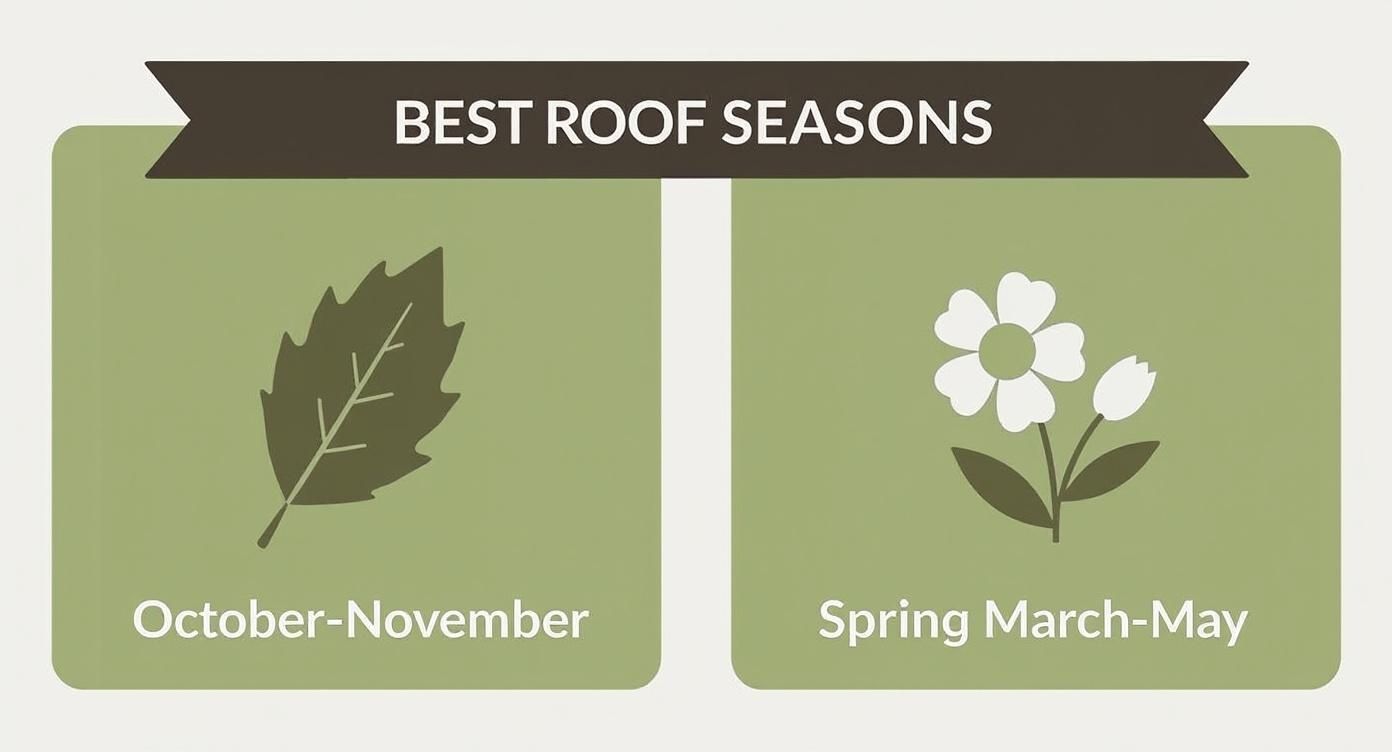
Like the graphic shows, those milder months bring low humidity and a whole lot safer footing for the crew. Book your job in one of these windows and you've already done the most important thing right. Good Tucson roofing services start with good timing.
To help you sort out what fits your schedule and your wallet, here's how each Tucson season shakes out for a roof replacement.
Tucson Roof Replacement Seasons at a Glance
The table runs through the things that actually matter season to season—weather, how booked we are, and how the materials behave.
| Season | Pros | Cons |
|---|---|---|
| Fall (Oct - Nov) | Ideal temperatures for shingles to seal; low chance of rain; stable weather for crews. | High demand from homeowners post-monsoon; potential for longer scheduling lead times. |
| Winter (Dec - Feb) | Lower demand means easier scheduling; cooler temps are manageable for crews. | Colder weather can make shingles brittle and slow adhesive activation; risk of overnight freezes. |
| Spring (Mar - May) | Excellent temperatures and low humidity; great for sealing before summer heat; crews are fresh. | Can be windy; demand starts picking up, so scheduling early is key. |
| Summer (Jun - Sep) | Not recommended for installation due to extreme heat. | Dangerous heat for crews; materials can soften and scuff; major risk of monsoon rain interruptions. |
Fall and spring win, plain and simple. They give us the steadiest conditions for a roof that goes on right and holds up against everything Tucson throws at it.
Why Fall Is the Gold Standard for Roofing
Ask anybody who's roofed here a while and you'll hear the same answer: fall is the one. Once the summer finally breaks and that cooler, drier air settles in through October and November, the window opens up.
It comes down to the weather. Asphalt shingles need that middle ground—not too hot, not too cold—to grab down and form a tight, watertight seal. Get the seal right and you're set against wind uplift and leaks for a long time. Get it wrong and you'll know within a season.
Fall timing also gets you out ahead of trouble. Monsoon leaves a lot of roofs banged up, and a fall job lets you find and fix that hidden storm damage before the cooler, damp winter sets in. That's why fall is the busiest roofing season in the country—homeowners patching up summer damage before the cold comes.
The catch? Everybody knows it's the best time, so the calendar fills up quick. Call early. If you want to dig into the materials and how the job actually goes, read our guide on shingle roof replacement in Tucson.
The Strategic Advantage of a Spring Roof Replacement
If fall's the gold standard, spring is right on its heels. That stretch from March to early May hands us what we want: mild, steady temperatures that suit roofing just fine.
That weather lets new shingles warm up, settle in, and lock down the waterproof seal your house leans on. Doing it in spring is getting out front of the problem—your roof's buttoned up and ready before the summer sun and the monsoon show up. Finish before the real heat lands and the roof's fully cured and braced for what a Tucson summer dishes out.
Beating storm season is one of the smartest things a homeowner can do. A spring replacement means your roof—the first thing standing between your family and the weather—is at full strength right when it counts.
Scheduling's the other win. Spring's busy, sure, but it's usually not the flat-out scramble we hit every fall after monsoon. That often means more room to get our best crew on your roof. Want to know if a spring install makes sense for your place? Start with a professional roof inspection so you know exactly what you're dealing with.
Navigating Summer and Winter Roof Replacements
Let's be honest—a roof replacement isn't always something you planned for. Sometimes it just can't wait. And if that hits in the dead of a Tucson summer or the cold of winter, even a seasoned crew is up against some real headaches.
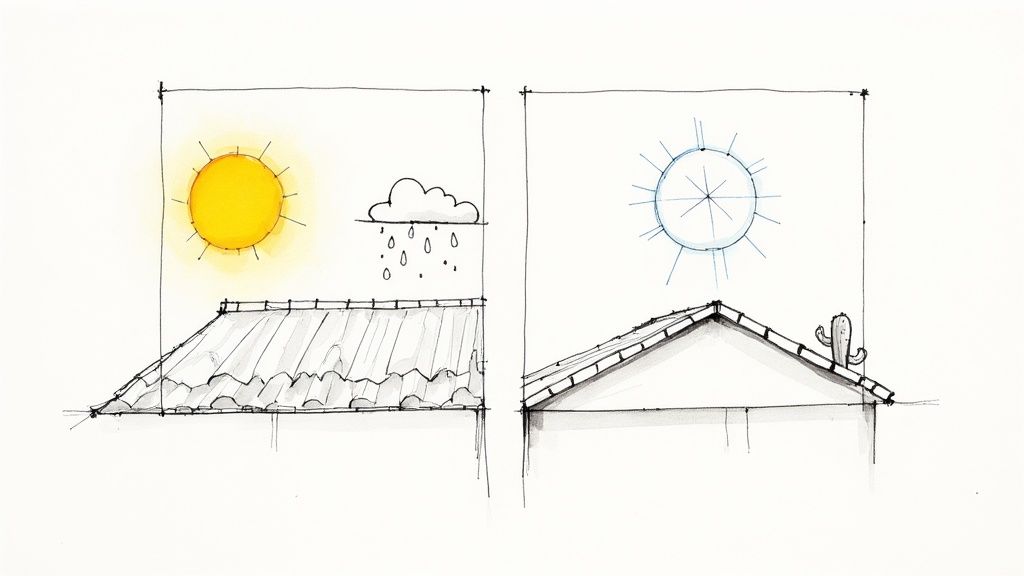
The Risks of Seasonal Extremes
Summer heat softens asphalt shingles while we're laying them down. They scuff easy and they fight the seal. Then there's monsoon. A storm blows up out of nowhere mid-job and suddenly your open roof—and everything under it—is taking on water.
Winter's no prize either. Cold makes those same shingles brittle, and a brittle shingle cracks when the nail gun hits it. Now your brand-new roof is compromised on day one.
Weather runs roofing schedules everywhere, not just here. Industry-wide, installation and repair make up about 80% of all revenue, which tells you how much hinges on getting the timing right. There's more on how climate shapes roofing trends over at Safelyio.
And it's not only shingles. Tile—a Tucson staple—doesn't love these temperature swings any more than shingles do. Timing matters there too. You can read up on what's involved in a concrete tile roof replacement and why scheduling it with a pro makes the difference.
How Seasons Impact Roofing Costs and Availability
When you replace your roof in Tucson isn't only about dodging monsoons. It's a money decision too. Roofing runs on supply and demand, and around here fall and spring are the peak.
In those perfect-weather months, everybody wants their roof done at once. Demand for good crews goes through the roof—pardon the pun—and the solid local companies book up fast.
Think of flying somewhere popular over spring break. Longer waits, higher prices, that's the trade for going when everyone else does. There's more data on these trends and other roofing industry statistics on Rooflink.com.
Flip side, you might find an open slot or even a little savings in the dead of summer or the cool of winter. But that discount has a catch, and it's a big one: it puts the quality and lifespan of your roof at risk. A cheap roof nailed on wrong in bad weather isn't a deal. It's a future leak.
Got Questions About Scheduling Your Roof Replacement?
Timing a new roof in Tucson, a couple of questions come up every time. What if a monsoon hits halfway through the job? Can I save money by waiting for the slow season?
Straight answer on the first one: if monsoon catches you mid-emergency, the job is damage control. We'll get a proper tarp on it to stop the water cold, but the full replacement waits for the safer, drier fall window. No sense fighting the sky.
On winter, some folks chase the lower price. Here's the problem. Cold turns shingles brittle, and they crack while we're nailing them. Worse, the heat-activated seal strips don't kick in, so the shingles never bond into one waterproof skin. You save a couple hundred bucks now and pay for it with leaks later.
Planning ahead beats all of it. Got questions about your own place, or want to talk timing for your project? Contact us for a detailed consultation—you call, you get Eddie.
Want a straight read on your roof? That's what we do at Sunrise Roofers LLC—a Tucson family, 20-plus years on these roofs. Set up your free, no-pressure inspection over at https://roofwithsunrise.com.
Need roofing services in Tucson? Request a free inspection or call 520-753-1758. Related pages: Roof Repair · Roof Replacement · Service Areas.
Published by Sunrise Roofers LLC
Licensed & Insured Roofing Contractor · Tucson, AZ