Flat Roof Coating in Tucson: Your Questions Answered
By Sunrise Roofers LLC · Jun 17, 2026 · 3-5 min read
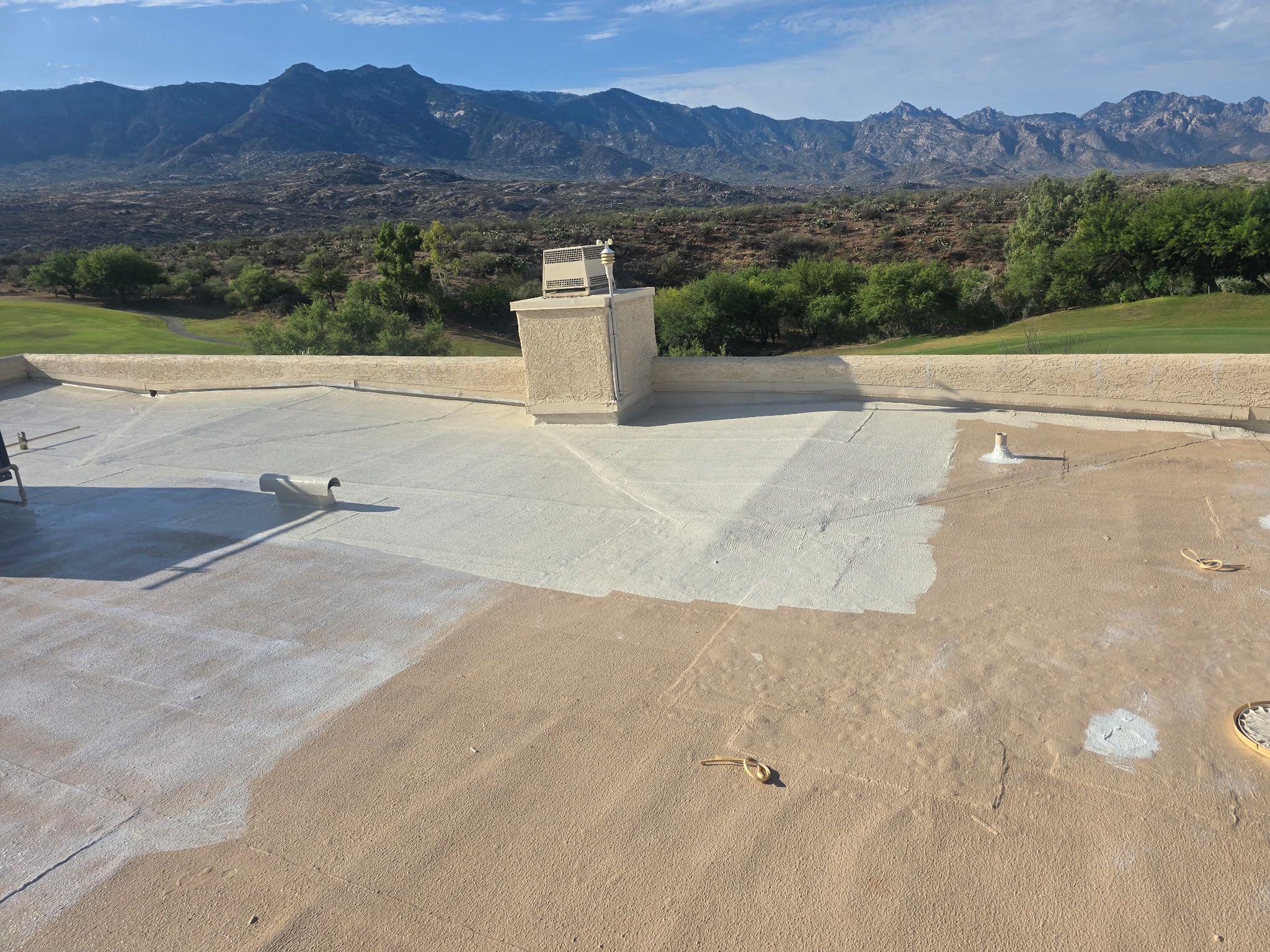
We wrapped up a flat roof coating job out in SaddleBrooke not long ago. Cool coat system, built to take Tucson sun and monsoon punishment. The homeowner kept asking how the stuff actually works and what he was paying for. Fair questions. We hear them every week from folks all over town. So if you're thinking about flat roof coating in Tucson, here's what people ask us most, answered straight.
What Is a Flat Roof Coating System and How Does It Work?
Think of it as a liquid you brush and roll on that dries into one solid, seamless skin over your old roof. No seams to fail. On that SaddleBrooke roof we ran a two-part system. First a rubberized primer to seal the surface and give the topcoat something to grab. Then an elastomeric topcoat that bounces heat off and keeps water out. The thing about these coatings is they stretch. Arizona rooftops go from 40-degree winter nights to 165 degrees on a July afternoon, and that membrane expands and shrinks right along with the roof instead of cracking the way stiff materials do.
How Long Does Flat Roof Coating Last in Tucson's Climate?
A good elastomeric coating runs 10 to 15 years out here with a little upkeep. Three things decide where you land in that range: how well the roof got prepped, how thick we laid the coating on, and whether you keep up with it. Our UV is brutal. It chews through roofing faster than it would in a cooler climate, but the coatings made for the Southwest are built for exactly that. Stay on top of inspections and small touch-ups and you'll get years past that. We've got customers in Oro Valley and Catalina Foothills who've recoated two and three times over the years. That's decades of life on the roof underneath, and they never had to pay for a full roof replacement.
What Are the Signs My Flat Roof Needs Coating or Repair?
Start with the water. If puddles are still sitting up there two days after a rain, your drainage is shot or the surface has worn down. Look for cracks, blisters, or spots where the old coating has worn clean through to whatever's underneath. Then look inside. Water stains on the ceiling after a monsoon storm mean it's already getting past the membrane. Here's one people miss: your cooling bill creeping up. A worn reflective coating quits bouncing heat and starts soaking it in instead. Catch any of that and book a roof inspection so somebody can tell you whether it's a coating job, a patch, or something bigger.
Should I Repair, Recoat, or Replace My Flat Roof?
It comes down to the deck and the membrane underneath. If the structure's solid and the trouble is just the surface coating wearing out, recoat it. That's most of the flat roofs we see in Marana and Vail, and it buys you years of protection for a fraction of what a new roof costs. Now if the membrane's failing all over, you've got bad ponding, or the deck itself is rotted, then we're talking replacement. We'll know which one it is once we get up there and look. Rule of thumb: roof's under 15 years old and the problems are skin-deep, coat it. Old roof with something wrong in the bones, replace it.
What Does the Coating Process Look Like and How Long Does It Take?
It all starts with cleaning. We clear the debris, fix any damaged spots, and get the roof bone dry. Dry matters. Then on goes the primer to seal the surface and bond to the topcoat. Once that's cured we lay down the elastomeric coating, one layer or more, building up to the thickness the manufacturer calls for. A typical home flat roof in Tucson takes us two to four days if the weather cooperates. Monsoon season can throw that off, because this stuff won't cure if it's wet. You can usually walk on it within a day, but the full cure takes longer than that.
How Should I Maintain My Coated Flat Roof in Tucson?
Upkeep is simple, but you can't skip it. After a monsoon storm, clear the drains and scuppers. Clogged drainage means standing water, and standing water wrecks any roof. Cut back the tree branches hanging over your roof too, since they drop leaves and can scuff up the coating. Get it inspected once a year so the little stuff gets caught before it turns into a big bill. Plenty of folks in Green Valley and around Tucson do a quick eyeball after monsoon and have us out every year or two, and their coated roofs hold up just fine. A small bad spot is usually a quick patch. Patch it early and you keep water out and stretch the life of the whole coating.
Thinking about a coating, or just worried about the roof you've got? Give us a call. We've coated hundreds of flat roofs around Tucson, and we'll get up there, tell you straight what shape it's in, and point you to whatever actually makes sense for your house and your budget. No commission reps, no closers. You call, you get Eddie. Contact us to set up an inspection or talk through your project.
Need roofing services in Tucson? Request a free inspection or call 520-753-1758. Related pages: Roof Coatings · Roof Repair · Roof Replacement · Service Areas.
Published by Sunrise Roofers LLC
Licensed & Insured Roofing Contractor · Tucson, AZ