How to Choose a Roofing Contractor in Tucson: Expert Guide
By Sunrise Roofers LLC · Oct 23, 2025 · 4-8 min read

Discover how to choose a reliable roofing contractor in Tucson with our expert guide. Learn to verify licenses, check insurance, compare estimates, and protect your home.
Introduction
Picking a roofer in Tucson is one of the bigger calls a homeowner makes. I've watched folks get burned because nobody told them to check a license, ask for insurance, or look at the work.
Here's how I'd find one you can trust:
Check their credentials and insurance.
Size up their local reputation and how long they've been at it.
Pull apart the estimates and the contract.
Find out who's climbing on your roof, with what.
By the end, you'll know how to make the right call.
Vetting Your Roofer: The Non-Negotiable First Steps
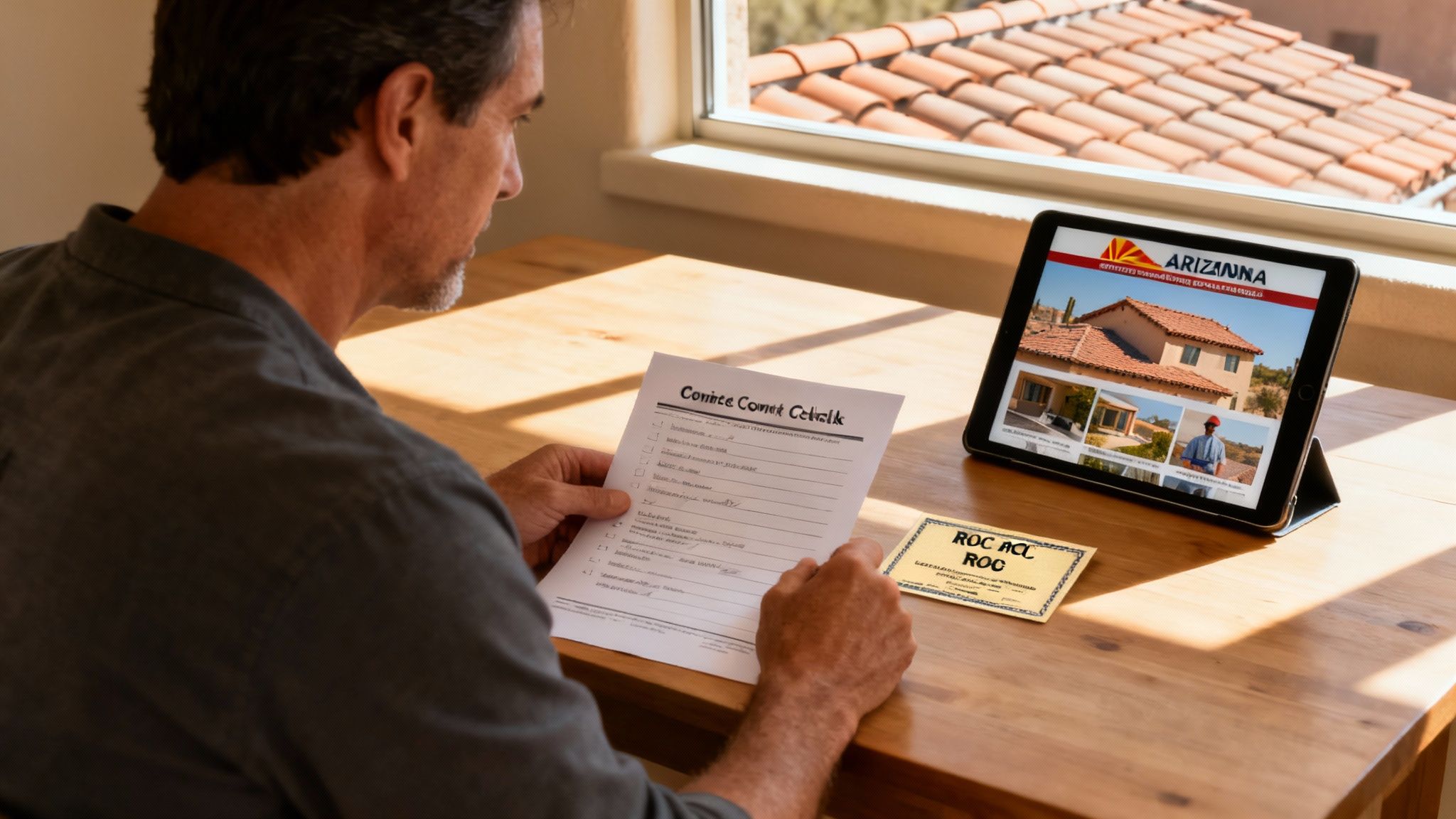
Your roof stands between your family and 110-degree heat and a monsoon that dumps an inch in twenty minutes. Before asking anybody for a quote, I run a quick filter to weed out the guys who don't belong there.
The Essential First-Pass Checklist
Miss any one of these and you're off my list:
AZ ROC License: Means they cleared the state's bar. Check it on the Arizona ROC site.
General Liability Insurance: Covers your property if something breaks. Ask for the Certificate of Insurance and call the agent to confirm.
Workers’ Compensation Insurance: If a worker gets hurt with no comp, that bill can land on you. A real roofer shows the certificate without flinching.
Local Portfolio/References: Ask for 3–5 recent Tucson jobs and drive by to see the work.
This isn't box-checking. It's how you find out whether a contractor takes your home seriously.
Want more? See our Tucson homebuyer roof inspection checklist.
Decoding Contractor Licenses and Insurance
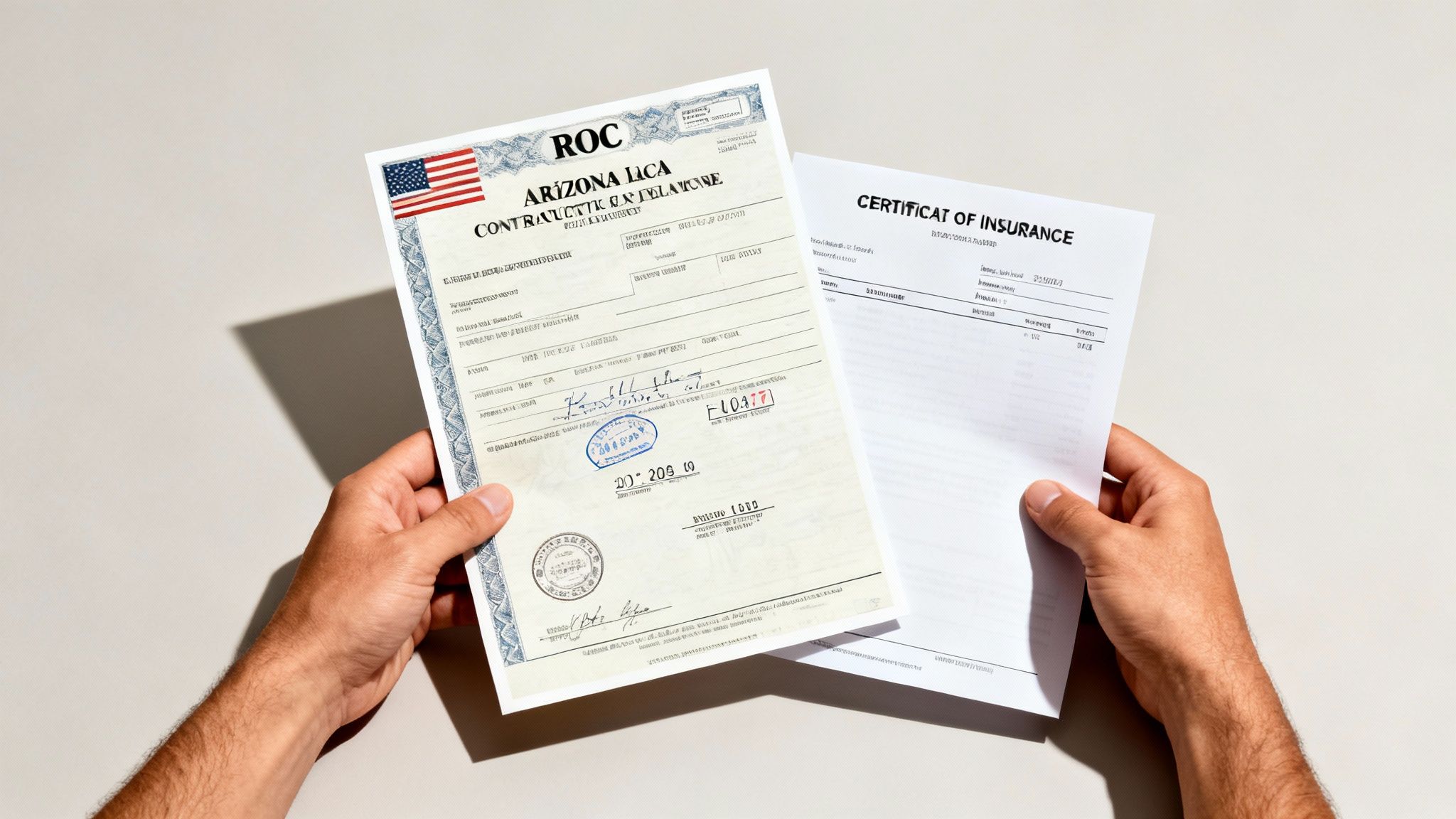
The paperwork separates a real pro from a guy with a truck and a business card.
Why an AZ ROC License Matters
A license from the Arizona Registrar of Contractors (ROC) tells you the contractor has:
Passed the trade exams.
Shown they're on solid financial footing.
Signed on to the ROC's dispute process.
Don't skip this one. Ours is ROC #358079 — look it up.
The Two Insurance Essentials
General Liability Insurance covers your property if something gets damaged — a broken window, torn-up landscaping.
Workers’ Compensation picks up the medical bills if a crew member gets hurt. Without it, that's your problem.
Pro Tip: Call the agent on the COI yourself and confirm the coverage is active and the limits high enough. Takes five minutes.
Our roofing contractors in Tucson have nothing to hide — check our credentials.
Assessing Local Reputation and Experience
Online reviews tell you something. But there's no substitute for calling past customers or seeing a finished roof near your own.
Going Beyond Star Ratings
When you get a reference on the phone, ask about:
Communication & Process: Did they keep you in the loop, or did you chase them down?
Professionalism on Site: Did the crew show up on time and clean up?
Problem-Solving: When something went wrong — and it usually does — how'd they handle it?
Would You Hire Them Again? Listen close. A slow "yeah" tells you plenty.
Why Tucson Experience Counts
Our climate bakes a roof under nonstop sun, then pounds it with monsoon rain. A roofer with decades out here knows what holds up and what falls apart in two summers. I've put in 20-plus years on these roofs.
See our work in the Tucson roofing gallery. Per recent industry statistics from RoofLink.com, 22% of roofing projects in the country are storm-damage jobs — another reason to hire somebody who knows desert weather.
How to Analyze Estimates and Contracts
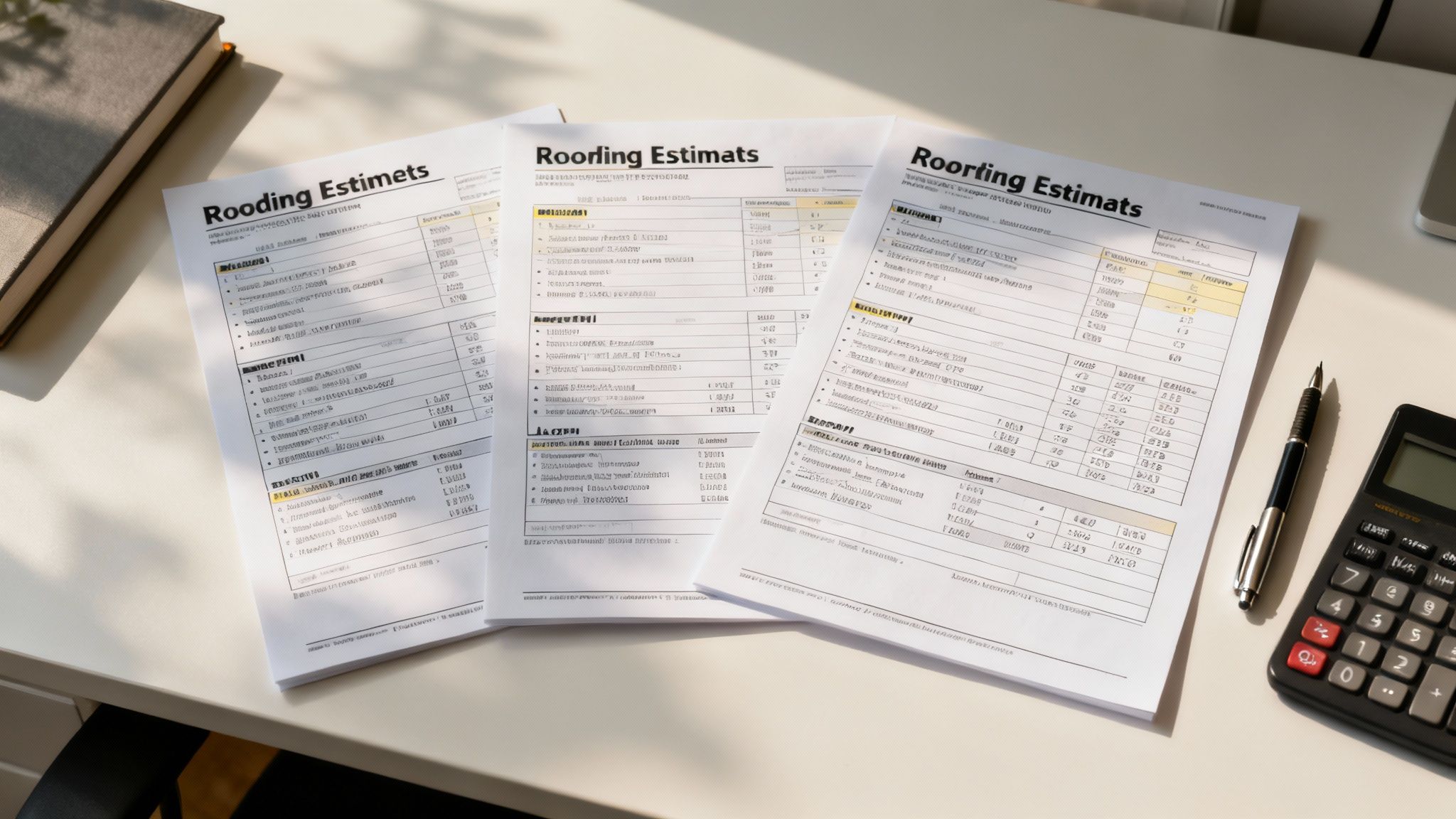
Getting three bids is just the start. The real work is reading each estimate and contract close enough to see what you're paying for.
Deconstructing the Estimate
A real quote spells out where every dollar goes:
Materials: Brand, type, and color of the shingles, plus underlayment, flashing, and ventilation.
Labor: Tearing off the old roof and putting on the new one.
Debris Disposal: Hauling off the old material and dumping it legally.
Permit Fees: City and county permits, listed out so nothing surprises you later.
A line-item estimate means a contractor's being straight with you. A vague, one-line number is a gamble, and you're rolling the dice.
Sealing the Deal with a Solid Contract
Your contract has to spell out:
Scope of Work: The exact materials and how much of each.
Timeline: Firm start and finish dates, not "sometime next month."
Payment Schedule: Deposits tied to milestones. Never pay it all up front.
Warranties: The manufacturer's warranty and the contractor's workmanship warranty.
That contract protects you if anything goes wrong, so make sure it matches the estimate exactly. See what we cover on our roofing services page.
Who Is Actually Installing Your Roof? (And With What Tools?)

The crew on your roof makes or breaks the job. Ask:
In-House Team vs. Subcontractors: An in-house crew means consistency and one person to hold accountable, not a rotating cast of subs.
Tools & Technology: The better outfits use drones to inspect safely and GPS-tracked delivery to keep things moving.
Here's why we run our own local team.
Making Your Final Choice and Starting the Project
Before you sign, read the contract once more and confirm it has:
Scope of Work and materials.
Project Timeline with clear start and end dates.
Payment Schedule tied to milestones.
Warranty Details on materials and workmanship.
Preparing for Day One
A good crew protects your property from the minute they arrive:
Drop off and stage materials out of your way.
Put down tarps and drop cloths to catch debris.
Walk the job with the foreman before any tear-off.
Communication Plan
Pin down one person to call, usually the project manager, and agree on:
Morning Check-ins: A quick text or call to start.
Midday Updates: A few photos emailed so you see where things stand.
End-of-Day Recap: What's done and what's next.
One more thing. A company that's still going strong is the one that'll be there when you need that warranty. Read up on the industry from Roofing Contractor magazine and check the Inc. 5000 list here.
Common Questions About Hiring a Tucson Roofer
How Many Estimates Should I Get?
Get three detailed, written estimates. Don't just compare the bottom-line number — look at the scope, materials, and how buttoned-up each bid is. The cheapest quote rarely saves money.
Understanding Warranties
Material Warranty: Covers defects in the product, from the maker (GAF, Owens Corning). We're GAF-certified, for what it's worth.
Workmanship Warranty: Covers install mistakes — and bad installs, not bad shingles, cause most leaks.
Do I Need a Permit?
Yes. A full roof replacement in Tucson and Pima County needs a permit, full stop. A real contractor pulls the permits and schedules the inspections. If somebody tells you to skip it, walk away.
Conclusion & Next Steps
Hiring a roofer doesn't have to be a headache. Check the license, confirm the insurance, call the references, and read the estimates line by line. Do that and you'll land a pro.
Ready to get your Tucson roof handled? Call Sunrise Roofers LLC for a straight, no-pressure estimate at https://roofwithsunrise.com. No commission reps, no closers — you call, you get Eddie.
Need roofing services in Tucson? Request a free inspection or call 520-753-1758. Related pages: Roof Repair · Roof Replacement · Service Areas.
Published by Sunrise Roofers LLC
Licensed & Insured Roofing Contractor · Tucson, AZ