New Construction Tile Roof in Rio Rico, AZ
By Sunrise Roofers LLC · Jul 21, 2026 · 3-5 min read
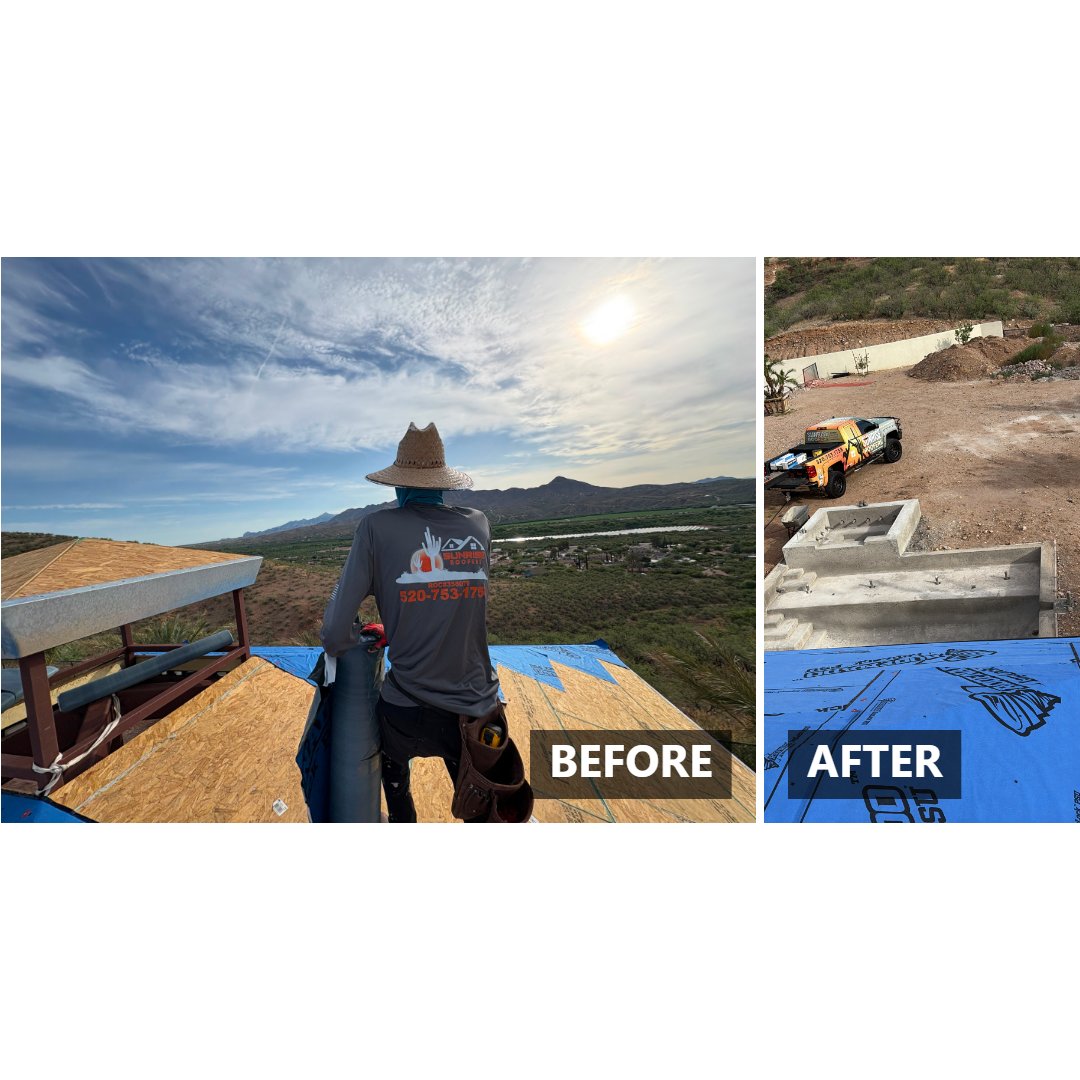
We just wrapped up a new construction tile roof out in Rio Rico — out there on a ridgeline with a view that'd make you forget you're supposed to be working. New build, concrete tile going on, and we laid down Roofnado LapLock PSU synthetic underlayment across fresh OSB decking before a single tile touched the roof. That underlayment detail matters a lot more than most people realize. I'll explain why below.
What goes into a new construction tile roof installation?
It's not just slapping tile on a frame. Before any tile goes down, you need solid decking — OSB or plywood — properly fastened to the rafters. Then comes the underlayment, which is your real water barrier. On this Rio Rico job we used Roofnado LapLock PSU, a self-adhering synthetic underlayment that bonds to the deck and seals around fasteners. That blue sheet you see in the photos? That's it, lapped and staged and ready for tile. Concrete tile goes on top of that, set on battens or direct-nail depending on the pitch. Flashing at every penetration, proper drip edge, and hip and ridge caps to finish it out. Every layer does something specific.
Why does underlayment matter so much on a tile roof?
Tile isn't waterproof by itself. It sheds bulk water and blocks UV, but wind-driven rain, monsoon splash-back, and driven moisture under the tile get stopped by the underlayment. Out here in Southern Arizona, monsoon season is brutal. Two or three inches of rain in an hour, with wind behind it. Your tile can look perfect and you'll still have a leak if the underlayment fails. Self-adhering synthetics like LapLock PSU beat old 30-lb felt by miles — they don't absorb moisture, they don't rot, and they stay bonded to the deck even in 115-degree summer heat. On a new construction build especially, you want the best underlayment you can afford because you're not pulling tile off to replace it anytime soon.
How long does a concrete tile roof last in Southern Arizona?
Done right? A long time. Concrete tile handles the desert climate well — the UV exposure, the thermal cycling from cold nights to scorching afternoons, the occasional hail. The tile doesn't really age out. What degrades first is usually the underlayment underneath it. That's why underlayment choice on a new roof installation matters so much — it's the part you can't easily see or replace without major work. Quality synthetic underlayment outlasts old felt by a wide margin in high-UV desert environments. The concrete tile on a properly installed roof like this one should be performing decades from now. If you want to understand what a full tile roof repair or replacement involves when the time comes, we've handled plenty of those too.
What's the timeline for a new construction tile roof?
Depends on the size and complexity, but a job like this one in Rio Rico — good-sized home, steep pitch, ridge details to work around — takes several days minimum. Decking inspection and any repairs come first. Then underlayment. Then tile delivery, staging, and installation. Then ridge and hip caps, flashing, and final inspection. Weather can push things around, especially if you're building through monsoon season. We don't rush the underlayment stage. Ever. Getting that layer right is the whole job.
Does the roof pitch or location affect how a tile roof is installed?
Yes, both. Steeper pitches drain faster and need battens to hold the tile in place properly. Lower slopes need extra underlayment lapping and attention to how water moves across the deck. Out in Rio Rico and the surrounding area — similar to what we see on hillside builds in Tucson's Catalina Foothills — you've got elevation changes, wind exposure, and sometimes sites that are just plain hard to access with a loaded tile truck. This job was up on a ridge. Beautiful view, but the logistics are different than a flat-lot suburban build. That's where 20-plus years of Arizona roofing experience makes the difference — knowing how to read a site and plan the work before the first sheet of underlayment rolls out.
How do I choose the right roofing contractor for new construction in Southern Arizona?
Check their ROC license first — ours is ROC #358079. Then ask specifically about what underlayment they use and why. Any contractor who can't answer that in detail probably isn't the one for a lifetime roof. Ask if they've done new construction builds in similar terrain and climate. Get it in writing — the product specs, the installation method, all of it. We work across Southern Arizona, including Green Valley and Sahuarita and down into the Rio Rico corridor, and we bring the same standards to every job regardless of zip code.
If you've got a new build in the works or you're a contractor looking for a reliable roofing crew, reach out to us directly. We'll talk through what your project needs and give you a straight answer on what it'll take.
```Need roofing services in Tucson? Request a free inspection or call 520-753-1758. Related pages: Roof Repair · Roof Replacement · Tucson Roofing.
Published by Sunrise Roofers LLC
Licensed & Insured Roofing Contractor · Tucson, AZ