Your Guide to Getting a New Roof in Tucson
By Sunrise Roofers LLC · Nov 18, 2025 · 16-24 min read
One shingle sitting crooked. A faint brown ring on the ceiling. That little nag in the back of your head. Usually that's the roof telling you something. Out here in Tucson, between the sun cooking everything all summer and the monsoon dumping an inch in twenty minutes, a small problem doesn't stay small for long.
A new roof is a big spend, no way around it. But it's protecting the most expensive thing you own, and around here it earns its keep.
When Is It Time for a New Roof
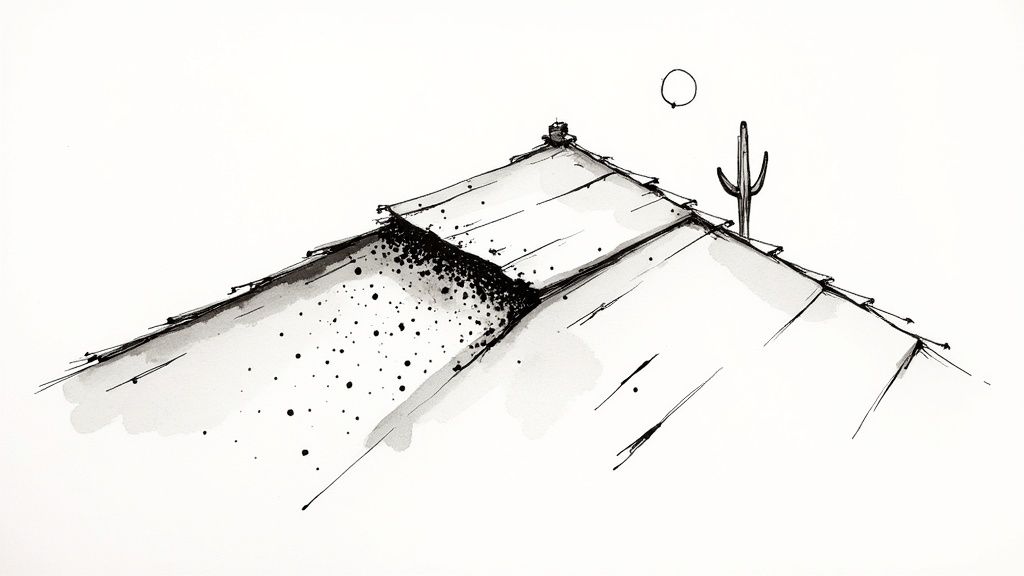
I get it. Nobody wants to drop money on a whole roof when a patch might buy you one more season. But there's a real difference between a roof that's just getting older and one that's actually failing, and out here that difference matters more than most folks think.
Wait too long and a one or two day job turns into tearing into your decking and framing. So don't wait for the leak. Catch it before the monsoon does.
Reading the Warning Signs
Your roof gives you plenty of warning. You just have to know the signs. On an asphalt shingle roof, the big one is granule loss. Those little sand-like grains are basically sunscreen for your shingles—they take the UV beating so the asphalt underneath doesn't.
Find a pile of that grit in your gutters or at the bottom of the downspout? Your shingles are drying out and going brittle. The sunscreen's wearing off.
Look at the shingles themselves too. Here's what I tell folks to watch for:
- Curling or Clawing: Edges and corners lifting up off the deck, or cupping down at the middle. Either way, they're not lying flat anymore.
- Cracking: Little splits running across the face of the shingle. That's age and sun, plain and simple.
- Bald Spots: Dark patches where the granules are just gone and you're looking at bare asphalt.
See those, and the shingles are done. One bad shingle is all the rain needs—it works in during a monsoon and next thing you know it's in your attic, your insulation, your framing. Cheap problem turns expensive in a hurry.
Beyond the Shingles
The shingles get all the attention, but a roof is a whole system and every piece has to do its part. Look hard at the spots around your vents, chimney, and skylights. The flashing there—those thin metal strips that seal the seams—cracks and pulls loose over the years. Honestly, that's where most leaks we chase actually start.
Inside the house the signs are even louder. Pop your head into the attic and look for water stains on the underside of the deck, or insulation that's damp to the touch. Smell something musty up there? Moisture's getting in somewhere. Sometimes the first thing you notice is paint peeling or a brown ring on a ceiling.
Before anybody goes climbing a ladder, this checklist covers what you can catch standing on the ground.
Roof Damage Assessment Checklist
Here's the rundown of what homeowners usually spot, what it actually means, and whether you're looking at a quick fix or it's time to start thinking about a new roof.
| Symptom | What It Looks Like | Potential Action (Repair or Replace?) |
|---|---|---|
| Granule Loss | Sand-like grit collecting in gutters and downspouts. | Replace: This is a sign of widespread aging. The shingles have lost their UV protection. |
| Curling Shingles | Edges of shingles are lifting or curling upwards. | Replace: Curling indicates the shingles are past their lifespan and can no longer seal properly. |
| Cracked Shingles | Visible cracks across the surface of many shingles. | Replace: Widespread cracking signals system-wide failure due to age and heat. |
| Missing Shingles | A few shingles are gone after a storm. | Repair: If the rest of the roof is in good shape, replacing a few shingles is a quick fix. |
| Ceiling Stains | Discolored spots or peeling paint on interior ceilings. | Repair or Replace: Depends on the source. Could be a simple flashing issue or a sign of a failing roof. |
| Damaged Flashing | Rusted, cracked, or loose metal around chimneys/vents. | Repair: Flashing can often be repaired or replaced without a full roof replacement. |
| Roof Age | The roof is 20+ years old. | Replace: Most asphalt shingle roofs in Tucson have a lifespan of about 20-25 years. |
Treat the checklist as a head start, not the final word. Somebody actually getting up on the roof is what gives you the full story.
When to Call a Professional
Looking things over from the ground is a great place to start. But if you're checking off two or three of these, or your roof's creeping up on the 20-year mark, get somebody out to look. When you call us, you get Eddie—no commission rep, no closer.
A real roof inspection goes way past glancing at shingles. We get up there and check the underlayment, the decking, the ventilation, the whole works. Then you actually know what you're dealing with, and you can make the call on your own timeline instead of waiting until water's coming through the ceiling.
How to Budget for Your New Roof
Let's be honest. The money part is the part everybody dreads, and a roof is no exception. But once you see what actually goes into the number, it stops feeling like some scary lump sum and starts making sense. It's not one giant price tag. It's a bunch of pieces that add up.
And a roof isn't just a roof. It moves your home's value, it keeps your family dry, and a good one shaves real money off your summer AC bill. So let's pull the cost apart piece by piece and build you a budget that doesn't blow up halfway through.
Deconstructing a Tucson Roofing Estimate
A real estimate isn't one number scrawled on the back of a card. It's a list of line items, and each one's there for a reason. Read those line items and you can tell a good bid from a bad one in about thirty seconds.
The biggest piece, no shocker, is materials. People want quality roofing and the market shows it—researchers put the global roofing materials sector at USD 139.33 billion in 2024, with more growth coming. You can dig into that on Fortune Business Insights if you're curious. Point is, what goes on your roof matters everywhere, not just here.
Next up is labor. That's the crew tearing off the old roof and putting the new one down right. Do not cheap out here. I've seen top-shelf shingles fail in five years because somebody nailed them wrong. The install is every bit as important as the material.
After that, your estimate covers a few more things:
- Permits: Pima County wants a permit on most roof jobs so the work meets code. That's a good thing—it means somebody's checking.
- Debris Disposal: The dumpster, the haul-off, the dump fees for all that old roofing. It adds up to more than people expect.
- Underlayment and Flashing: The quiet workhorses. Underlayment's your backup water barrier under the shingles, and flashing seals the weak spots. You never see either one, but they're doing the heavy lifting.
The cheapest bid is hardly ever the best deal. When a number comes in way under everybody else, somebody's cutting a corner—cheaper material, no permit, or no real insurance. Ask what's in the price. Then ask what's not. That second answer tells you the most.
Hidden Costs and How to Plan for Them
Even with a tight estimate, stuff turns up. The one we run into most around Tucson is rotten decking hiding under the old shingles. The decking is the wood your whole roof sits on, and it has to be solid. No way around that.
A straight-shooting contractor puts a per-sheet price for plywood right in the contract before the job starts. So if a few sections are shot, you already know the number. A contract might spell out plywood at $100 per sheet, installed. No mid-job sticker shock, no "well, it turns out" conversation halfway through the tear-off.
The other thing that sometimes gets added is attic ventilation. In our heat, airflow up there isn't optional—it keeps the shingles from baking themselves to death and it knocks money off your cooling bill. If your venting's weak, we might tell you to add some. Costs a little now. Pays you back for years.
Financing and Insurance Options
A roof is a chunk of money, but you don't always have to write one big check. Plenty of solid local roofers run financing, so you can spread it out over monthly payments you can actually live with.
And if a monsoon, hail, or high wind did the damage, call your homeowner's insurance before you do anything else. Your policy might cover a big slice of the cost. Snap a ton of photos of the damage and get your agent on the phone fast to open the claim. We've dealt with adjusters plenty, so we can help walk you through it.
If you've got your eye on a specific material, it's worth getting into the real numbers. Our guide on shingle roof replacement costs goes deep on one of the most popular picks in Tucson. The more you know going in, the better the call you'll make for the long haul.
Choosing the Best Roofing Materials for Arizona
Picking the material for your new roof is a big call. And in Tucson it's about more than what looks nice from the curb. You're picking something that has to take a UV beating all summer, shrug off a monsoon that shows up out of nowhere, and handle temperatures that swing forty degrees between noon and midnight. The right material keeps your house dry and quietly saves you money on cooling too.
So let's go through the top choices for Arizona homes and what actually counts out here: how long it lasts, what it does to your energy bill, and whether it's worth the money.
High-Performance Asphalt Shingles
Forget the thin, curl-up-in-a-year shingles you remember. Today's architectural shingles are a whole different animal—thicker, way tougher, and built to fake the look of slate or wood shake without the slate or wood shake price.
Around here, what you want is cool roof shingles. The granules on them are made to bounce a big share of the sun's infrared back off the roof. Less heat soaking in means a cooler attic, a cooler house, and a smaller AC bill come July. They're not pricey, and they work on just about any style of home.
The graphic below shows how materials fit into the budget on a typical roof job.
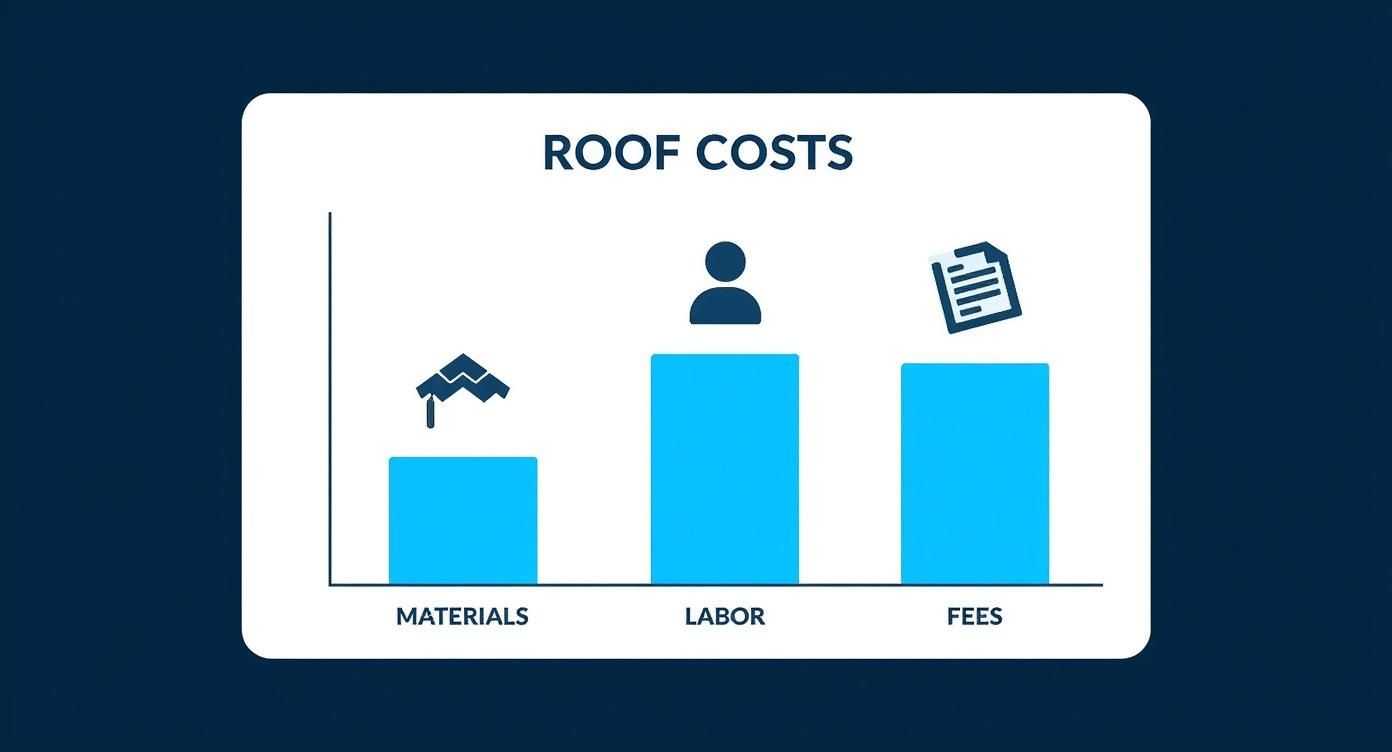
Materials are a big chunk, but look at labor—it's right there next to it. Which is the whole point. Whatever you put up top, it's the install that decides how long it lasts.
Timeless and Durable Tile Roofing
Drive around any Tucson neighborhood and they're everywhere—those classic tile roofs that just say Southwest. Clay and concrete both might as well have been invented for the Sonoran Desert. They fight off heat naturally, and that little air gap under the curved tiles lets the roof breathe.
- Concrete Tiles: Tough as nails and flexible. They come in every shape and color you can think of, including the flat modern profiles, and they stand up great to fire and wind.
- Clay Tiles: That reddish terracotta everybody pictures. The look never goes out of style and they'll run you 50 years or more. Built to last, though a touch more brittle than concrete, so they don't love getting stepped on.
The thing with tile is always the weight. Clay and concrete are heavy, and your house has to be built to carry that load. Any roofer worth a dime checks the structure before they even bring up putting tile on your new roof.
Tile costs more up front—it lasts a long time and it takes real skill to install right. But spread that cost over how long it lasts and it often wins. If you're leaning that direction, walking through what a concrete tile roof replacement actually involves will show you exactly what you're signing up for.
Here's a quick side-by-side of the popular options and how they hold up in our climate specifically.
Tucson Roofing Material Comparison
| Material | Average Lifespan (Tucson Climate) | Cost per Square Foot (Installed) | Energy Efficiency Rating |
|---|---|---|---|
| Cool Roof Shingles | 20-25 Years | $4.50 - $7.00 | Good to Excellent |
| Concrete Tile | 40-50+ Years | $9.00 - $15.00 | Excellent |
| Clay Tile | 50-70+ Years | $12.00 - $20.00 | Excellent |
| Standing Seam Metal | 50-70+ Years | $10.00 - $18.00 | Excellent |
You can see the trade-off in those numbers. Shingles are easy on the wallet day one. Tile and metal cost more, but they keep going for decades and keep saving you on cooling the whole time.
Premium Metal Roofing Solutions
Metal's gotten really popular lately, and I get why. It looks sharp and modern, it's tough, and it sips energy. The standing seam style, with those clean vertical lines running up the roof, works especially well in our sun.
Those panels almost always come with a reflective coating that throws the sun's heat right back off your house. For staying cool, it's about as good as it gets.
It costs more than shingles going in, sure. But a metal roof runs 50 to 70 years, sometimes more. It's basically no-maintenance, it won't burn, and it holds tight when the monsoon winds come ripping through. It's also light, which can be a real plus on certain houses.
Modern Flat Roof Systems
A ton of Tucson homes have flat or low-slope sections—over the patio, the carport, a room somebody added on later. For those, TPO (that's Thermoplastic Polyolefin) is the standard now. It's a single-ply membrane and the seams get heat-welded together, so the whole thing comes out as one solid waterproof sheet with no gaps to leak.
That bright white TPO bounces a lot of heat, which makes it a heck of a cool roof and keeps your flat sections from soaking up the sun. Tough, efficient, looks clean. Fits right in with the styles you see all over Southern Arizona.
How to Vet Your Tucson Roofing Contractor
https://www.youtube.com/embed/oGTIMovhk1g
Getting the material right matters. But who nails it down matters just as much. The best shingle in the world fails in a few years if the wrong guy installs it.
Truth is, the roofer you pick is the biggest decision in this whole thing. Do your homework. Find somebody you can actually trust.
And in Tucson that means more than a quick Google search. You want somebody who knows our weather in their bones—the summer heat that won't quit, the monsoon that tears through every single year like clockwork.
Start with the Non-Negotiables
Before you look at a single photo of their work or ask what it costs, there are two things every contractor has to clear. These are what keep the fly-by-night guys and the legal headaches away from your front door.
First, check their license with the Arizona Registrar of Contractors (ROC). Takes two minutes online. It tells you the company's legally allowed to roof in this state, which means they put in the years and passed the tests to get there.
Second, and don't skip this, make sure they're insured. Ask to see two policies in writing:
- General Liability Insurance: This covers your property. If a crew member puts a ladder through your siding or wrecks your landscaping, this pays to fix it instead of you.
- Worker's Compensation Insurance: This covers you. A worker gets hurt on your roof and there's no comp, guess who the lawyer comes after. It pays their medical bills and lost wages so that's never your problem.
Never hire a roofer who can't hand you a current certificate for both liability and worker's comp. I don't care how nice they seem. One thing goes sideways up there and you're on the hook. Not worth it.
Asking the Right Questions
Once the basics check out, start digging. What you ask tells you a lot about a contractor—how they work, how much they've actually done, whether they know their stuff. Go past "what's it gonna cost." Ask the things that show you've thought about this.
A few good ones to start with:
- Who's my point of contact on the job? When a question comes up mid-install—and one will—you need to know exactly who to grab.
- How do you protect my landscaping, windows, and AC during the tear-off? A real crew has an answer ready: tarps, plywood, the whole drill. If they fumble this one, that tells you something.
- Your own guys or subs? Not automatically a dealbreaker. But you've got a right to know who's on your roof and that they're covered under the company's insurance.
- What happens if you find rotted decking? A good roofer already has a plan and a per-sheet price written into the contract. No "we'll figure it out later."
What you want is a crew with real local roots and the habit of telling you straight. Reading up on the people behind our roofing contractors in Tucson gives you a yardstick for what a straight-shooting roofer ought to look like.
Decoding the Roofing Estimate
Get at least three written estimates. And when they land, don't jump straight to the number at the bottom. A good estimate lays the whole job out, piece by piece, so you can actually see what you're paying for.
A bid worth trusting spells out things like:
- The exact brand and type of shingle, tile, or whatever's going on.
- The full scope, tear-off of the old layers included.
- Underlayment, flashing, and ventilation.
- Permit and dump fees.
- Both warranties spelled out—the one on the material and the one on the work.
Lining the bids up side by side is how the red flags jump out. One comes in way under the rest? Something's missing. Cheaper material, maybe, or no real insurance. Your roof's a big spend. A detailed estimate is where a job that goes right gets its start.
What to Expect on Installation Day
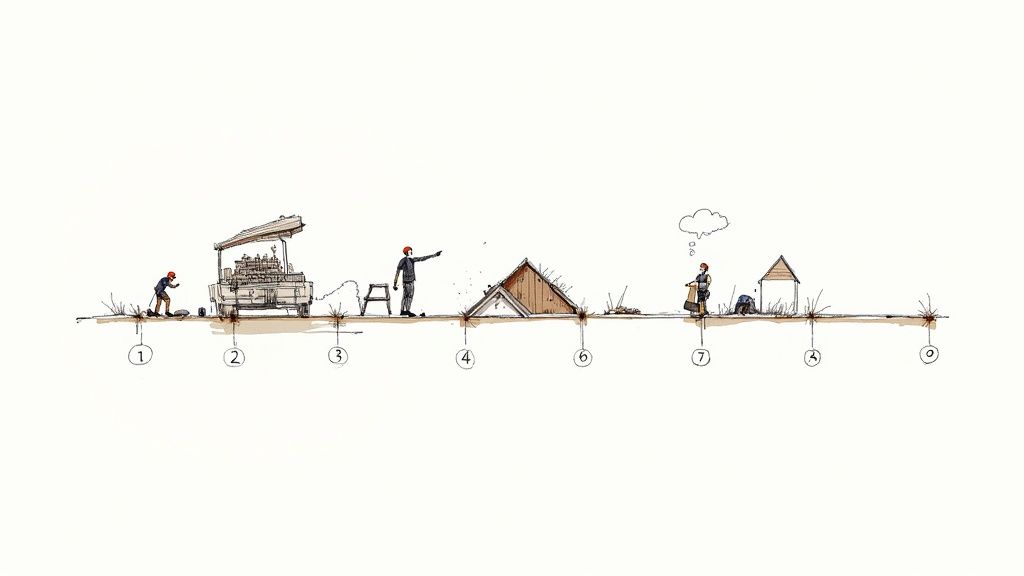
Contract's signed, material's ordered. Now the main event—putting your new roof on. Knowing how the day actually goes turns what could feel like chaos into something you can just watch happen.
Most regular house roofs around Tucson are done in one or two days, depending on how big and how cut-up the roof is. A good crew runs tight. Everybody knows their job, and the whole thing moves safe and on schedule.
The Morning Kick-Off
It starts early. Expect the crew first thing, usually rolling in with a big truck or a dumpster for the old roof. Before one shingle comes off, the crew lead—your guy for the day—ought to knock and check in with you.
Good time to run through the last few things:
- Move Your Cars: Pull everything out of the driveway and away from the house. Keeps stuff from landing on your hood and gives the crew room to work.
- Protect Your Property: Watch that they're laying tarps down over your plants, your AC, and along the windows before the tear-off starts.
- Keep Pets Inside: A roof job is loud and chaotic. Keep the dog and the cat shut indoors, away from the work zone, for everybody's sake.
Once it's all prepped, the tear-off kicks off. Brace for the racket—this is the loudest stretch of the day, the crew stripping everything down to bare wood.
From Decking to Done
With the old roof gone, the crew can finally see the wood deck clear. Now's when they check it for rot and damage. Like we talked about, anything that needs replacing gets handled right then at the price already in your contract.
Then the new roof goes on, and it's not just slapping down shingles. It goes on in layers, in a set order, to build a barrier water can't beat. Drip edge first. Then ice and water shield in the trouble spots like the valleys. Then underlayment over the whole roof.
Only once that foundation's set do the shingles or tiles go down. New flashing and the right vents finish it off. Got flat sections? That's when something like TPO goes on. We walked through a job just like that in our Tucson flat roof coating transformation case study.
The Final Walk-Through and Cleanup
Last shingle goes down and it's all about cleanup. A real crew takes this seriously. They run magnetic rollers over the yard to pick up every stray nail and clear the debris off your walkways and out of your gutters. The aim is simple—leave the place looking better than they found it. A nail in your tire two weeks later is how you remember a bad roofer.
Before you cut that last check, always do a walk-through with the crew lead. This is your shot to look the work over up close, ask whatever's still on your mind, and make sure it's done the way you wanted. A good contractor expects this. Honestly, we like it.
While you're up close, look for shingle lines that run clean and straight, and check that the flashing around the chimney and vents is sitting tight. And don't leave without the paperwork—the warranty on the material and the warranty on the work. Those documents in your hand are what protect this thing for the next couple decades.
Got Questions About Your New Roof?
Even after all that, most folks still have a couple things on their mind. Totally normal. Here's what people in Tucson ask us most, answered straight, no runaround.
How Long Does a New Roof Last in Tucson Anyway?
Big question. It mostly comes down to what you put up there. The manufacturer's number is a starting point, but our UV and our monsoons will always shave some off the back end. Nature of the desert.
A solid architectural shingle roof gives you a real 20 to 25 years. Step up to concrete or clay tile and you're at 50 years or more. A standing seam metal roof? That might be the last one you ever buy—they run 50 to 70 years regular.
One catch: you hit those numbers with decent attic ventilation and a little upkeep. Ignore it and they come up short.
Will My Homeowners Insurance Pay for My New Roof?
Probably the question we hear most, and the honest answer is it depends. Homeowner's insurance is built for sudden, accidental damage—what the policies call an "act of God." A bad hailstorm. Monsoon winds peeling shingles off. A tree coming down on the house.
What it won't touch is a roof that just wore out from age or never got maintained. If you're sure a storm hammered your roof, first thing, take a pile of photos. Then call your agent and get the claim going. Don't sit on it.
Here's the thing to hang onto: insurance covers damage, not old age. If your roof simply ran out the clock, the new one's coming out of your own pocket.
Can I Just Put a New Roof Over My Old One?
That's called a "roof-over" or an "overlay"—new shingles laid right on top of the old ones. Skipping the tear-off saves a little on labor, sure. But it's a bad idea, and a worse one out here in Arizona.
We pretty much never go for it. Here's why:
- Hidden Damage: You can't see the deck under there. You might be sealing rot or water damage right in, and that comes back to bite you hard.
- Too Much Weight: Shingles are heavy. A whole second layer piles on load your house was probably never built to carry.
- It Cooks the New Shingles: Laid over the old ones, the new shingles can't sit flat. That leaves little pockets where heat builds up, and in our sun that eats years off their life.
Bottom line, any roofer in Tucson worth hiring will push for a full tear-off. It's the only way to know the deck under your new roof is solid and the whole thing's going to do its job for decades. Starting clean wins every time.
Ready to protect your home with a roof built for the Tucson climate? At Sunrise Roofers LLC, we combine decades of local experience with a commitment to clear communication and quality craftsmanship. Get a transparent, no-pressure estimate for your new roof by visiting us at https://roofwithsunrise.com.
Need roofing services in Tucson? Request a free inspection or call 520-753-1758. Related pages: Roof Repair · Roof Replacement · Service Areas.
Published by Sunrise Roofers LLC
Licensed & Insured Roofing Contractor · Tucson, AZ