Your Guide to Roofing in Tucson
By Sunrise Roofers LLC · Oct 31, 2025 · 13-21 min read
A new roof in Tucson is not a matter of slapping down shingles and calling it a day. You're building a shield for your home, one made to take a beating from the desert and keep going. The hard part for any homeowner out here is landing on a system that holds up to blistering sun and monsoon storms, year after year after year.
Why Your Tucson Roof Is a Critical Investment
Roofing in the Sonoran Desert is a whole different animal. That standard stuff they use back east? It dies young out here, because it was never built for our one-two punch of punishing UV and sudden, drowning downpours.
Your roof isn't just a lid on the house. It's half your cooling system and your home's front-line defense, all in one. The roof you pick hits your comfort and your wallet every single day. Good materials bounce the sun's heat away, take a load off the AC, and shave your summer power bills. Out here, durability and energy efficiency aren't extras. They're the whole point.
Your roof is one of the biggest investments you'll ever put into your property. The right roof for this climate protects the structure, adds value, and keeps the curb appeal up for decades.
This guide walks you through the decision so you can make it with your eyes open. We'll cover the things that actually matter and leave you ready to move on your project.
Before we get into the weeds, here's the bird's-eye view of what counts for a roof in our climate.
Tucson Roofing Priorities at a Glance
This table lays out the factors that make or break a Tucson roofing job. It's the short list of what we're up against here and what you should have in mind from day one.
| Key Factor | Why It Matters in Tucson | Top Considerations |
|---|---|---|
| UV Resistance | Tucson's intense, year-round sun degrades materials, causing cracking and failure. | Choose materials with high UV ratings like coated metal, ceramic tile, or specialized membranes. |
| Heat Reflectivity | A dark, heat-absorbing roof drives up cooling costs and stresses your HVAC system. | Prioritize "cool roof" options with a high Solar Reflectance Index (SRI) to bounce heat away. |
| Monsoon Durability | Sudden, violent winds and torrential rain demand a robust, well-sealed system. | Ensure proper fastening, underlayment integrity, and expert flashing details. |
| Material Longevity | The extreme temperature swings between day and night cause expansion and contraction. | Select materials that can handle thermal shock without becoming brittle, like concrete tile or metal. |
Keep these front and center from the start and your roof won't just last. It'll perform where it has to, out here in the desert.
Key Decisions for Tucson Homeowners
A new roof comes down to a handful of real choices. Nail these early and you'll ask sharper questions and land a better local roofer. Here's what you're deciding:
- Material Selection: Classic concrete tile for its proven toughness? Standing seam metal for the modern look and the reflective punch? Or something else entirely?
- Energy Efficiency: How does your roof actually knock down cooling costs through our brutal summers? There's a lot more to it than picking a light color.
- Hiring a Contractor: What licenses, qualifications, and real local experience does a roofer absolutely need to work in this climate?
Dig into these and you'll end up with a roof that does more than keep the rain out. It'll be the kind you stop thinking about. That's the best protection your home can have.
Choosing the Best Roofing Materials for the Desert
Picking a roofing material in Tucson is like gearing up for a desert hike. Get it wrong and you pay for it in comfort, in safety, in dollars down the line. Where the sun never lets up and the rain comes rare but hard, any old material won't do. A roof here has to reflect, not just cover.
The first job of a Tucson roof is beating back the heat. A material that soaks up and holds solar energy turns your attic into an oven, runs your AC ragged, and balloons your bill. That's exactly why we always steer folks toward materials that reflect the sun instead of swallowing it.
Concrete and Clay Tiles The Classic Desert Choice
Picture a Tucson roof and you're probably seeing tile. Concrete and clay are iconic around here for good reason. They're built for our climate. That thermal mass slows heat down, and the curve of the tile leaves a pocket of air between the tile and the deck. That little air gap is a natural insulator, and a great one.
So what makes tile a smart pick?
- Exceptional Durability: Tile shrugs off years of UV and monsoon wind without cracking or wearing out.
- Long Lifespan: Put it on right and a tile roof goes 50 years or more. That's a real investment in the house.
- Aesthetic Appeal: Loads of colors and styles, and it just looks right against the Southwestern homes you see all over town.
The catch with tile is the weight. Your house has to be framed strong enough to carry it, and the install costs more upfront than some other options. But that longevity and those energy savings usually win out and pay you back over the years.
Metal Roofing Modern Efficiency and Strength
Metal has shot up the list for Tucson homeowners who want modern looks and serious performance in one package. Forget the rusty tin barn roof in your head. Today's residential metal is engineered for real energy efficiency and a long, tough life.
The big deal with modern metal is its "cool roof" tech. Factory coatings can bounce back up to 70% of the sun's energy, which cuts way down on the heat that ever reaches your house. That can mean cooling savings of up to 25%.
These systems are light, fire-resistant, and good for 50+ years with barely any upkeep. Standing seam panels, with that clean modern line, are the style we see most. If metal's on your mind, it's worth reading up on the specific benefits of metal roofing in Tucson.
Coatings for Flat Roofs
Plenty of Tucson homes sit under flat or low-slope roofs, and those call for a different game plan altogether. A reflective elastomeric or silicone coating goes down as a liquid and cures into a seamless, waterproof membrane. It seals the seams, shrugs off UV, and cuts the cooling load noticeably.
This infographic lays out what Tucson homeowners actually care about when they're weighing roofing materials.
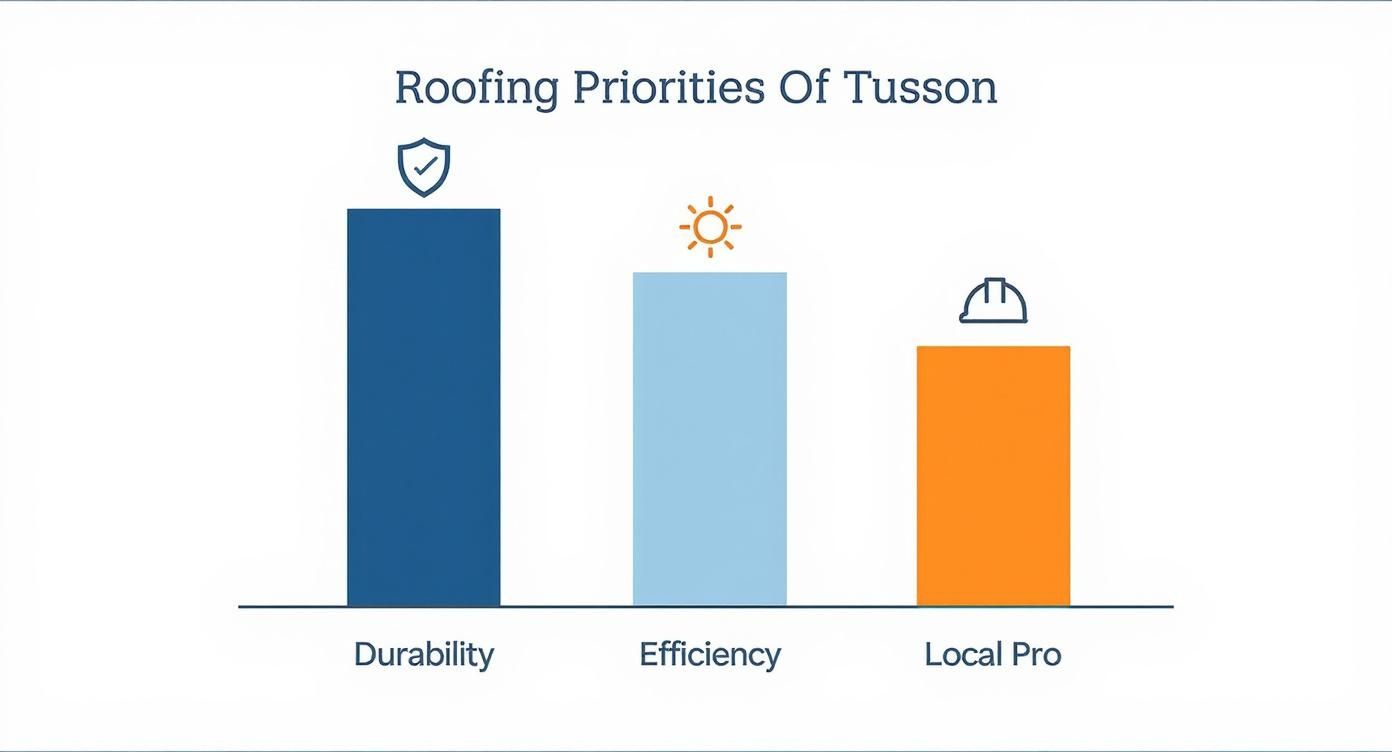
Durability and efficiency top the list, which is the whole reason you stick with materials proven to hold up out here. Asphalt shingles are everywhere back east, but they have a rough time in Tucson. They just don't have the toughness or the heat reflection to take our sun.
So our climate pushes folks toward the harder-wearing stuff, tile and metal, which can run past 50 years. An asphalt roof might land at $8,000 to $15,000, sure. But the long-term value and the energy savings on a tile or metal system usually earn back that bigger upfront check.
Comparing Top Roofing Materials for Tucson Homes
To make the call easier, here's a plain comparison of the materials we see most on Tucson homes. It shows how each one stacks up on cost, lifespan, and how well it stands up to the desert.
| Material | Typical Lifespan in Tucson | Average Cost Per Sq. Ft. | Energy Efficiency | Key Pros and Cons |
|---|---|---|---|---|
| Clay & Concrete Tile | 50+ years | $12 - $25 | Excellent | Pros: Classic Southwestern look, highly durable, fire-resistant. Cons: Heavy (may need structural reinforcement), higher initial cost. |
| Metal Roofing | 50+ years | $10 - $20 | Excellent | Pros: Very durable, lightweight, superior "cool roof" performance, fire-resistant. Cons: Higher upfront cost than shingles, can be dented by hail. |
| Coatings | 20-30 years (with recoats) | $7 - $12 | Excellent | Pros: Seamless, great insulation, ideal for flat roofs. Cons: Requires periodic recoating, vulnerable to puncture damage. |
| Asphalt Shingles | 15-25 years | $5 - $9 | Fair to Good | Pros: Lower initial cost, wide availability. Cons: Shorter lifespan in desert heat, less energy efficient, prone to wind damage. |
The best roof for your house is the one that takes decades of sun and rides out monsoon season without quitting. Spend on quality material like tile or metal at the start and it tends to pay you back in lower bills and a lot fewer repair calls later on.
Breaking Down the Cost of a New Tucson Roof
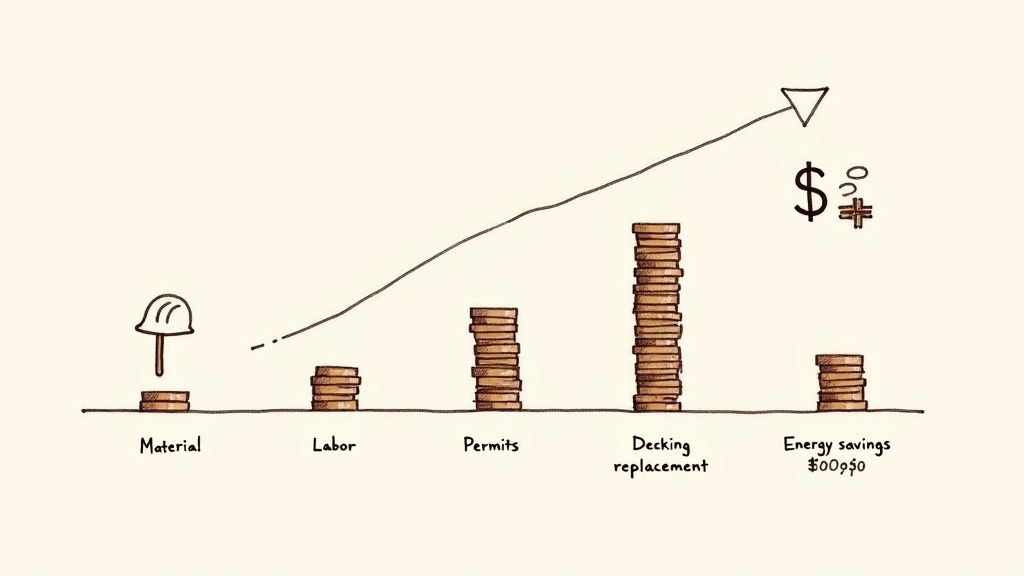
Pinning down the cost of a new roof can feel like chasing a moving target. A handful of factors drive that final number on your quote, and once you understand them, you can set a budget for your roofing in Tucson project that actually holds.
It's a lot more than the tiles or shingles you see from the curb. Three things mostly set the price: the material you go with, the skilled crew it takes to install it, and the quirks of your particular house.
Key Factors That Shape Your Roofing Quote
The biggest driver is the size and complexity of your roof. A simple single-story ranch costs less than a sprawling two-story with a mess of peaks, valleys, and skylights. More square footage means more material and more hours on the clock for the crew. Plain and simple.
Then there's the material itself. Like we covered, the best desert options carry different price tags:
- Asphalt Shingles: Cheapest going in, but it doesn't last as long under the Arizona sun. There's more on it in our guide to shingle roof replacement in Tucson.
- Concrete or Clay Tile: Costs more upfront, but pays you back with serious longevity and that classic Southwestern look. Installed right, a tile roof easily clears 50+ years.
- Metal Roofing: Another premium pick, known for being tough and remarkably efficient since it throws so much solar heat right back.
Labor is a big slice too. You're not just paying for hours on the roof. You're paying for skill, proper insurance, and the know-how to get it right. A tile roof, for one, takes more specialized hands than a straight shingle job.
A detailed, line-item quote is the sign of a roofer with nothing to hide. It should split out materials, labor, permits, and any possible extras, so you know exactly what you're paying for and there are no surprises buried in the total.
Uncovering Potential Hidden Costs
Sometimes the costs that hit hardest are the ones nobody can see from the ground. A good roofer always checks the roof decking, the wooden sheathing the whole system sits on.
If that check turns up soft spots, water damage, or rot, the decking gets replaced before a single new material goes down. There's no skipping it. It's what holds your roof together, and yeah, it adds to the bill.
Permit fees and hauling off the old debris are part of the number too. A pricier upfront tab for a tough, efficient roof can sting at first, but it usually pays off later in cheaper cooling and fewer headaches.
How Monsoon Season Impacts Your Roofing Project
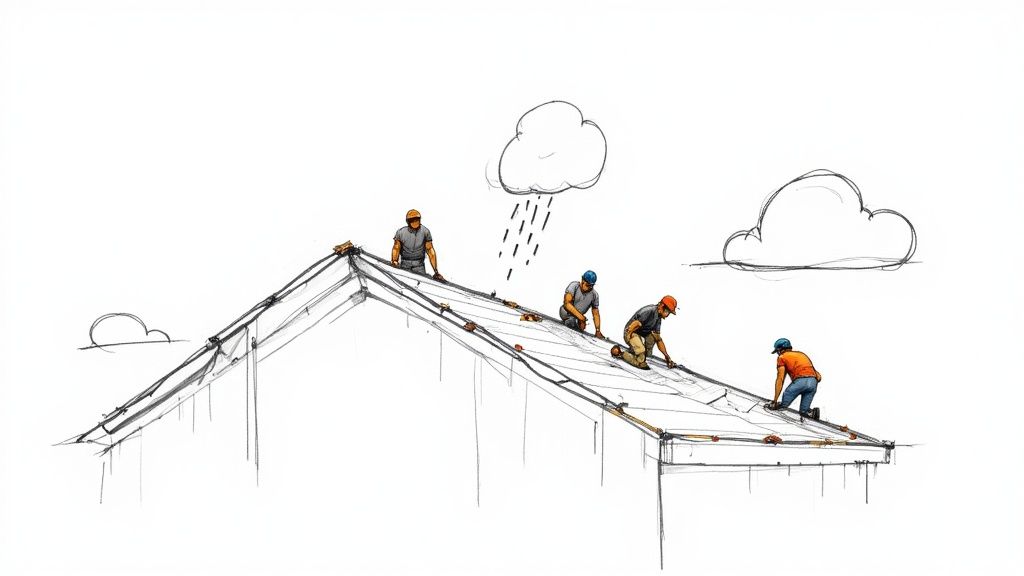
Tucson's monsoon season runs June to September, and it flips our weather on its head. If you've got an outdoor project going, a roof replacement especially, the daily chance of a sudden downpour can look like a dealbreaker.
It isn't. For a homeowner who needs a new roof, monsoon season is just part of living here, not a hard stop. The whole thing hinges on hiring a roofer who actually knows our weather.
A green crew might rip your whole roof off in one shot and leave the house wide open. That's a gamble you don't want to make. A storm sneaks in and you've got catastrophic water damage in a matter of minutes.
A Tucson roofer who's been around plays it smarter. We work in smaller sections, and whatever we tear off gets repaired and sealed back up tight before we leave for the day. Your house never sits open overnight. Period.
Monsoon Vulnerabilities to Watch For
All that sun and heat in the weeks before the monsoon quietly beats up your roof, leaving it wide open to the wind-driven rain that follows. A pre-monsoon inspection is one of the smartest dollars you can spend. It catches the weak spots before they blow up into real leaks.
The warning signs to watch for:
- Cracked or Missing Tiles: Open doors for water. Once rain gets under there, it goes straight to work on your underlayment.
- Aging Underlayment: This waterproof barrier is your last line of defense. Old and brittle from years in the sun, it can give out fast when a storm hits.
- Clogged Gutters and Drains: Water with nowhere to go backs up under your tiles and flashing, and that's how you get rot and leaks in spots you'd never expect.
Staying ahead of it is your best defense against monsoon damage, hands down. Knock out the small stuff in May or early June and you save yourself the stress and the bill of an emergency call in the middle of a July storm.
The Right Crew Makes All The Difference
Roofing through summer really comes down to whether you trust your roofer's process. How he handles the weather risk is the whole thing. A good crew knows monsoon-season roofing is doable, it just takes a plan. We pull and replace sections day by day so your home is never left open when a storm rolls up.
Got a flat roof? Now's the time to make sure your protective coating is in good shape. You can see what a quality coating does to ready a roof for the weather in our case study on a Tucson flat roof coating transformation.
With the right crew, monsoon season isn't a wall. It's just one more thing you plan around.
Finding a Tucson Roofing Contractor You Can Trust
Right material matters, but your roof is only as good as the crew nailing it down. Picking the roofer for your roofing in Tucson is the most important call you'll make in this whole thing. You're looking for someone you can trust with your home.
Pick wrong and you get sloppy work, costs out of nowhere, and a roof that fails the moment a monsoon hits. Pick right and you get to stop worrying about it. You know the job was done correctly, with good materials and good workmanship, the kind that takes our desert for decades.
The Non-Negotiable Credentials
Before you ask anybody for a quote, three credentials are flat-out required for any real Arizona roofer. If they don't have all three, they're not even in the conversation for your project.
- Licensed: A valid license from the Arizona Registrar of Contractors (ROC) shows the roofer met the state's bar for knowledge and experience.
- Bonded: A surety bond protects you. If the roofer walks off the job or stiffs his suppliers, the bond covers you financially.
- Insured: He has to carry general liability and workers' comp both. That's what keeps you off the hook if somebody gets hurt or something gets damaged while the work's going on.
Never hire a roofer who can't put proof of all three in your hand on the spot. Hesitation or excuses? That's a huge red flag. Not worth the risk to your house or your bank account.
Digging Deeper Than Online Reviews
Online reviews are a fine place to start, but they rarely tell you everything. Watch for patterns. Does the same praise keep coming up, that they communicate well, show up on time, leave the site clean? Those are the marks of a crew that's run right.
Don't stop at reviews, though. A roofer who's proud of his work will hand you a list of local references without blinking.
Calling a few past customers is worth the ten minutes. Ask the real questions. Did it stay on budget? How'd the crew handle the stuff that came up mid-job? Was the cleanup actually done? That kind of straight talk beats a star rating every time.
This is also when you ask about local experience. You can see what seasoned hands bring to the table by reading more about our roofing contractors in Tucson and what makes a local crew different. A roofer who really knows Tucson's building codes and our monsoon headaches is the best thing you've got going for you.
The Power of Professional Associations
Belonging to an industry group is another sign a roofer takes the work seriously. In Arizona, the big one is the Arizona Roofing Contractors Association (ARCA). It's been pushing high standards since 1969, when roofers out of Tucson and Central Arizona joined up to build one body for the state's pros. You can read up on what they're about in the history of ARCA.
An ARCA membership tells you the roofer means it. It shows he keeps up with best practices and runs an honest shop. One more piece that points you toward somebody you can actually trust with your home.
Your Next Steps to a Secure and Reliable Roof
Alright. You made it through the whole guide. Now you know why some materials thrive under the Tucson sun, what an honest quote actually looks like, and why hiring a real local pro is worth holding out for. That's the best tool you've got for protecting your home.
Last thing is putting it to work. Time to go from reading about it to doing it, knowing you're ready to pick the right roof.
Your Action Plan
- Schedule Inspections: Don't take one opinion and run. Call at least three solid local roofers and get a full inspection from each. A real pro spots things up on the roof you'd never catch from the yard.
- Get Detailed Quotes: Insist on a line-item breakdown for materials, labor, and permits. That's not being a pain, that's being smart. It's the only way to weigh offers fairly and catch a red flag.
- Check Credentials: Before you sign anything, verify the license with the Arizona Registrar of Contractors (ROC). Ask for proof of insurance and bonding too. A real roofer won't blink.
Your home is probably the biggest thing you'll ever own, and out here your roof is its first line of defense against a brutal climate. Take these last few steps and you make sure that investment sits under a solid roof put on by somebody who knows what he's doing.
A Few Common Questions About Tucson Roofing
If you own a home in Tucson, you've probably got questions about keeping a good roof over your head in this climate. From monsoon prep to trimming the AC bill, here are straight answers to what folks ask us most.
How Often Should I Get My Roof Inspected Here?
Out in the desert, stuff wears out fast. We say get a professional roof inspection at least once a year. Late spring is the sweet spot, right before the monsoons fire up in June.
Getting a roofer up there to look around catches the small stuff, a cracked tile, a bead of sealant that's failing, before it becomes a real problem. Way easier to fix that minor thing now than after a monsoon rolls in and finds the weak spot for you. House hunting? Our Tucson homebuyer roof inspection checklist is a solid resource for knowing what to look for.
Are "Cool Roofs" Really Worth It in Tucson?
Yep. A cool roof is one of the smartest upgrades you can put on a home in Southern Arizona. These aren't ordinary roofs. They use materials made to throw the sun's heat back off your house. Light-colored tiles, special metal coatings, bright white elastomeric coatings, that sort of thing.
A proper cool roof can drop your roof's surface temperature by 50°F or more. That's huge. Less heat soaks into your attic and your living space, the AC doesn't have to grind nearly as hard, and you feel it on the power bill every month.
Why Is Everyone So Focused on Roof Underlayment in Arizona?
Underlayment is your roof's last line of defense, the part nobody sees. It's the water-resistant barrier that goes down on the wooden deck before the tiles or shingles. When a wind-driven monsoon rain comes screaming in, it can shove water right past your top layer. The underlayment is what keeps that water out of your attic.
Here's the rub. Arizona's year-round UV is murder on materials. Cheap underlayment cooks and goes brittle. That's exactly why we don't mess around with anything but a quality synthetic out here. It's what holds the whole system together on the day it counts.
Ready to get expert answers for your specific roofing needs? The team at Sunrise Roofers LLC provides clear, honest assessments and high-quality solutions built to last in the desert. https://roofwithsunrise.com
Need roofing services in Tucson? Request a free inspection or call 520-753-1758. Related pages: Roof Repair · Roof Replacement · Service Areas.
Published by Sunrise Roofers LLC
Licensed & Insured Roofing Contractor · Tucson, AZ