Wrong Underlayment Under Tile Roofs: A Tucson Warning
By Sunrise Roofers LLC · Jun 25, 2026 · 3-5 min read
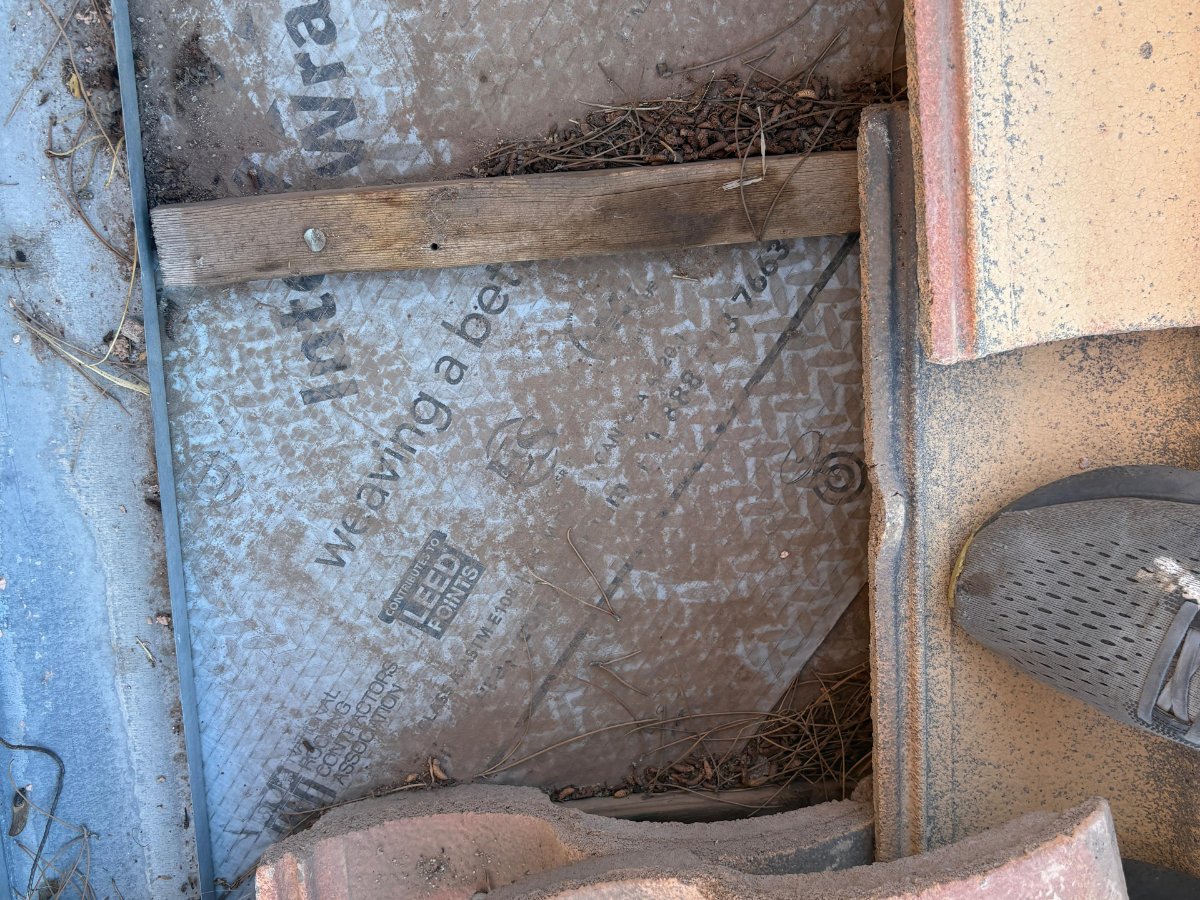
We did an inspection recently out in Sonoita — a concrete S-tile roof that looked decent enough from the driveway. But once we pulled a few tiles and got eyes on the underlayment underneath, the problem was right there. Synthetic underlayment. The kind that's designed for shingle roofing systems, not tile. Someone had installed the wrong product under that tile, and the homeowner had no idea.
That's exactly why a proper roof inspection matters. You can't see this stuff from the ground.
What's the difference between tile underlayment and shingle underlayment?
Tile roofs breathe differently than shingle roofs. A concrete or clay tile system needs an underlayment rated specifically for tile — typically a heavier, two-ply or Type 40/Type 30 felt, or a tile-rated synthetic that can handle the long-term exposure and moisture movement that happens under a tile system. Tile sits up off the deck on battens, which means air and moisture circulate under those tiles constantly. Standard synthetic underlayments built for shingles aren't engineered for that environment. They degrade faster, shift, or fail to properly shed water the way a tile-rated product would.
In the photo from this Sonoita job, you can see the underlayment exposed between the battens, dry and brittle, with debris packed in around it. The product printed right on the material shows it's a standard synthetic — not a tile-rated underlayment. One hard monsoon season and that's a leak waiting to happen.
Does this actually cause leaks?
Yes. Eventually. The tile itself sheds most of the rain, but it's not waterproof — the underlayment is your real last line of defense. Arizona monsoons are no joke. We get hard, wind-driven rain that finds every gap. If the underlayment underneath is the wrong product and it's already breaking down, water gets to your deck. From there it's rot, mold, ceiling stains, and a much bigger repair bill than if you'd caught it early.
The desert sun is brutal too. UV exposure at Tucson's elevation is extreme. A shingle-rated synthetic sitting on a batten system, exposed to that heat cycling day after day, years on end — it ages out faster than the manufacturer ever intended for that application.
How do I know if my tile roof has the wrong underlayment?
You probably don't — not without pulling tiles and looking. That's the honest answer. Most homeowners never know until they have a leak or someone like us does a thorough inspection. Some signs that something's wrong underneath: staining on interior ceilings after rain, tiles that lift or shift more than normal, or a roof that's 15-plus years old and has never had the underlayment checked. If your tile roof was installed on the cheap, or you bought the house and don't know the history, it's worth having someone get up there and pull a few tiles to verify what's under them.
We cover the whole region — whether you're in the Catalina Foothills or out in Tucson proper, we see this more than people expect.
What happens next when the wrong underlayment is found?
It depends on the condition. If the underlayment is still intact and the tiles are in good shape, it might be a watch-and-document situation for now. If it's crumbling, cracked, or already letting water through, the right move is a full tile-off re-underlayment — pull all the tiles, remove the bad material, install the correct tile-rated underlayment, and reset the tiles. That's essentially a tile roof repair project, and in worse cases it overlaps with a full roof replacement depending on deck condition. We'll tell you straight which one makes sense for your situation.
We don't push replacements when a repair is the smarter call. But we also don't let a known defect slide just because the tiles look fine on top.
Should I be worried if my tile roof is older?
Older isn't automatically a problem, but age plus unknown installation history is worth taking seriously. Tile itself can last 40-50 years in Arizona. The underlayment underneath? Usually 20-25 years under normal conditions, less if it was the wrong product to begin with. If your roof was put on in the late 90s or early 2000s, it may be time to have someone actually look at what's under those tiles — not just walk the ridge and call it good.
We're a family operation — Eddie and Viky Guillen, ROC #358079, over 20 years on Arizona roofs. We've seen what shortcuts look like after a decade of monsoons. If you've got a tile roof and you're not sure what's underneath it, reach out and we'll take a look.
```Need roofing services in Tucson? Request a free inspection or call 520-753-1758. Related pages: Roof Repair · Roof Replacement · Tucson Roofing.
Published by Sunrise Roofers LLC
Licensed & Insured Roofing Contractor · Tucson, AZ