How much roof replacement cost: A Homeowner's Budget Guide
By Sunrise Roofers LLC · Oct 29, 2025 · 13-21 min read
A new roof is a big check to write, and the prices you see online are all over the place. Nationally, a typical home lands somewhere around $11,500.
But that's just a middle-of-the-road number. The real range runs from about $6,700 on a simple job all the way past $80,000 once you get into high-end materials or a tricky, cut-up roof.
Breaking Down Your Roof Replacement Cost
So what actually makes up that number at the bottom of your estimate? It's a stack of things: the materials, the labor, tearing off and hauling away the old roof, new underlayment and flashing, and the permits. Every one of those adds to the total.
The total comes down to materials, the crew's time, and a handful of other things that keep the job solid for the long haul. Here's what shows up on a typical quote:
- Roofing material: The biggest number on the page. Basic asphalt shingles are the easy-on-the-wallet pick. Premium stuff like slate or standing seam metal costs a whole lot more.
- Size and complexity: It's geometry. A small, simple roof is cheap next to a big steep one full of angles, valleys, dormers, and skylights. More cuts and corners means more hours.
- Labor: A good crew is a real chunk of your money, and worth it. You're not just paying for shingles. You're paying for them to go on right so the roof doesn't leak in the first monsoon.
- Where you live: Labor rates, permit fees, even what materials are sitting in stock all shift from one town to the next, and that moves your number.
The material you pick sets the tone for both what you pay today and what the roof is worth over its life. Asphalt shingles are popular because they're cheap. But metal and tile last so much longer that, spread out over the decades, they can end up being the smarter money.
To make it real, here's a quick table with average costs on a standard 2,000 sq. ft. roof across the common materials.
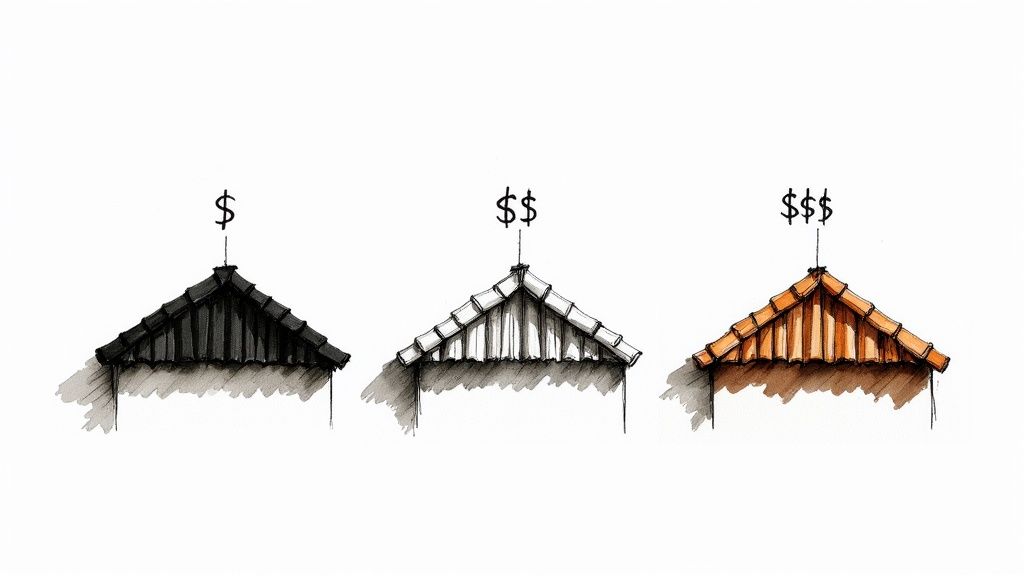
Average Roof Replacement Cost By Material
Here's a side-by-side so you can see roughly where each material lands for your budget.
| Roofing Material | Average Cost Per Square Foot (Installed) | Total Estimated Cost |
|---|---|---|
| Asphalt Shingles | $4.50 – $8.00 | $9,000 – $16,000 |
| Metal Roofing | $8.00 – $18.00 | $16,000 – $36,000 |
| Wood Shakes/Shingles | $7.00 – $15.00 | $14,000 – $30,000 |
| Clay/Concrete Tile | $10.00 – $25.00+ | $20,000 – $50,000+ |
| Slate | $15.00 – $40.00+ | $30,000 – $80,000+ |
Remember, these are ballparks to get you in the neighborhood. Once you've got a feel for what you want, take a look at our roofing services and we'll work up a real number for your house.
What Really Drives Your Roofing Quote
A roofing quote isn't one big mystery number. It's really three things added together. Once you see those three pieces, you understand where your dollars go and why two roofers can hand you wildly different bids on the same roof.
Your cost splits into three buckets every homeowner ought to know: materials, labor, and the supporting work, which is the tear-off, the dumpster, the underlayment, the flashing, and the permits.
The biggest slice, usually 40% to 60%, is the materials. And that's the part you've got the most say over.
The Foundation: Your Roofing Materials
What you put on the roof drives the whole budget. A standard architectural asphalt shingle is affordable, does its job, and gives you 20 to 30 years.
Standing seam metal hits you harder up front, but it pays you back with 50+ years, real toughness, and lower cooling bills in our sun. The gap between the two can swing a quote by tens of thousands.
The rest of the common materials land somewhere in between:
- Clay or slate tile: Premium and heavy. You pay more for the tile itself and for the specialized hands it takes to set it right.
- Wood shakes: A gorgeous, one-of-a-kind look. The catch is the upkeep, which adds up over the years.
The Engine: Your Installation Labor
The second big piece is labor, usually 40% to 50% of the bill. And no, you're not just paying somebody to nail shingles down. You're paying for skill, for years on roofs, for a crew that works safe. A seasoned crew costs more than a green one, and there's a reason for that.
That money buys underlayment laid down properly, flashing done right where the roof meets a chimney or a skylight, ventilation that actually works. Those are the little things that keep a roof from leaking and make it last as long as it should. How big the crew is and how many days the job runs feed into this number too.
A real roof inspection is how you catch the hidden stuff before work starts. It lets your roofer hand you a labor estimate that actually holds up, instead of one that balloons halfway through the job.
Want a clear read on what your roof actually needs? Schedule a roof inspection and we'll climb up and tell you straight.
The Overlooked Essentials: Permits and Disposal
The last 10% to 20% covers the behind-the-scenes stuff that keeps a job clean and legal. These aren't extras. They're the cost of doing it the right way.
This slice covers:
- Permits: Your city or county wants them so the work meets code and passes inspection.
- Hauling the waste: Tearing off an old roof makes a literal ton of debris. It's got to go in a dumpster and get dumped legally.
- Overhead and insurance: The contractor's liability coverage and all the coordinating that keeps your job moving from day one to the last nail.
Once those three buckets click for you, the materials, the labor, and all the supporting work, you can read any roofer's quote and know exactly what's behind the final number.
Choosing Materials That Match Your Budget and Home
On a new roof, the material is the single biggest decision you'll make. It's a tug-of-war between what you shell out today and what you get out of it for years. And it's going to set how your house looks and how well it's protected for a long, long time.
This is where "true cost of ownership" stops being a buzzword. A cheaper material saves you money today, sure. But if it needs constant patching or wears out in half the time, you've spent more by the end. The trick is finding the spot where your budget today and your roof's whole life both make sense.
The graphic below breaks down a typical quote so you can see how the materials, the labor, and everything else stack up into the final number.
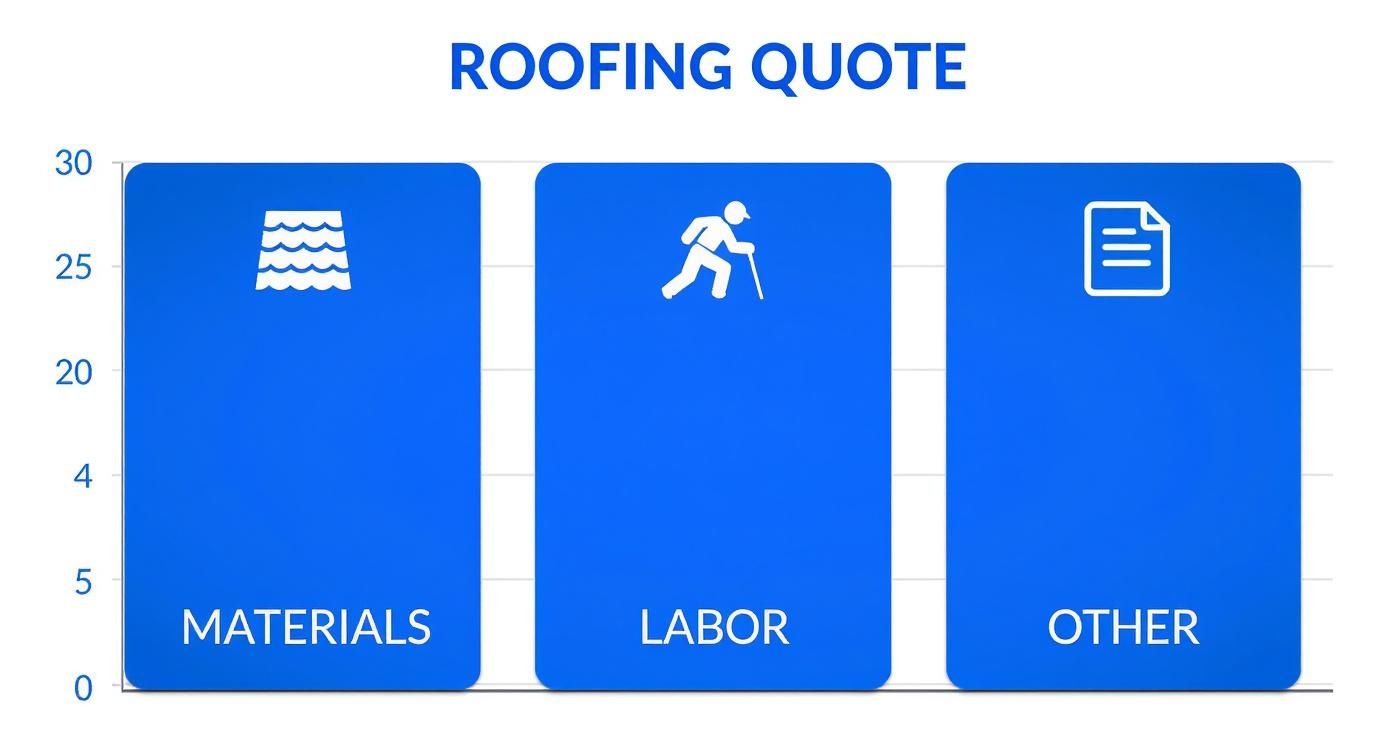
Like you can see, materials and labor do most of the heavy lifting. Together they're often 80-90% of the whole bill.
Asphalt Shingles: The Most Popular and Affordable Option
There's a reason asphalt shingles end up on most American homes. They're the cheapest way in, which makes them doable for a lot of folks. And modern architectural shingles actually look sharp and hold up 15 to 30 years when they're installed right and you don't neglect them.
They're also flexible. Shingles come in every color and style under the sun, so matching your house is easy and won't drain the account. Curious if it's the right call for your place? Read up on shingle roof replacement in Tucson.
Investing in Longevity: Metal and Tile Roofing
Asphalt's a great value, but some folks would rather spend more now for a roof they'll basically never replace. That's where metal and tile come in.
- Metal roofing: You used to only see it on warehouses, but standing seam and other metal styles keep showing up on homes now. They go 40 to 70 years, laugh off wind and fire, and bounce the sun's heat back off so your AC isn't running nonstop. Out here, that matters.
- Clay and concrete tile: For that classic look that just fits certain houses, nothing beats tile. These roofs are stupidly durable, 50 to 100 years or more. The downside? They're heavy, and they often need extra framing underneath, which bumps the install cost.
Picking a material is more than a money decision. It's a commitment to how safe and how good your house is going to be for decades. Weigh what it costs today against how long it'll actually last, and you'll make the smart call.
Roofing Material Comparison: Lifespan vs. Cost
To really decide well, you've got to look past the sticker price and see the options next to each other. Here's how the common materials stack up.
| Material | Cost Per Square Foot (Installed) | Expected Lifespan (Years) | Pros | Cons |
|---|---|---|---|---|
| Asphalt Shingles | $4.50 – $8.00 | 15–30 | Affordable, versatile styles, easy to repair | Shorter lifespan, susceptible to weather damage |
| Metal Roofing | $8.00 – $18.00 | 40–70 | Very durable, energy-efficient, low maintenance | Higher upfront cost, can be noisy without proper insulation |
| Clay/Concrete Tile | $10.00 – $25.00+ | 50–100+ | Extremely long-lasting, fireproof, great curb appeal | Very heavy, requires specialized labor, can be brittle |
In the end, the right material comes down to what you care about most. Maybe it's keeping today's cost down. Maybe it's a roof that outlives you. Either way, knowing these differences helps you land on the one that fits your budget and your house.
Uncovering the Hidden Costs of Roof Replacement
That quote for materials and labor is just the starting line. A few "hidden" things, usually specific to your house, can show up and move what your roof replacement cost actually lands at. Set a little money aside for those surprises up front and the whole project goes a lot smoother.
Think of it like this. Re-roofing a simple one-story ranch is a flat, straight shot. A multi-level home with steep angles is a whole different animal. It eats more time, takes more skill, and needs extra safety gear. All of that lands on the bill.
Your Roof’s Unique Architecture
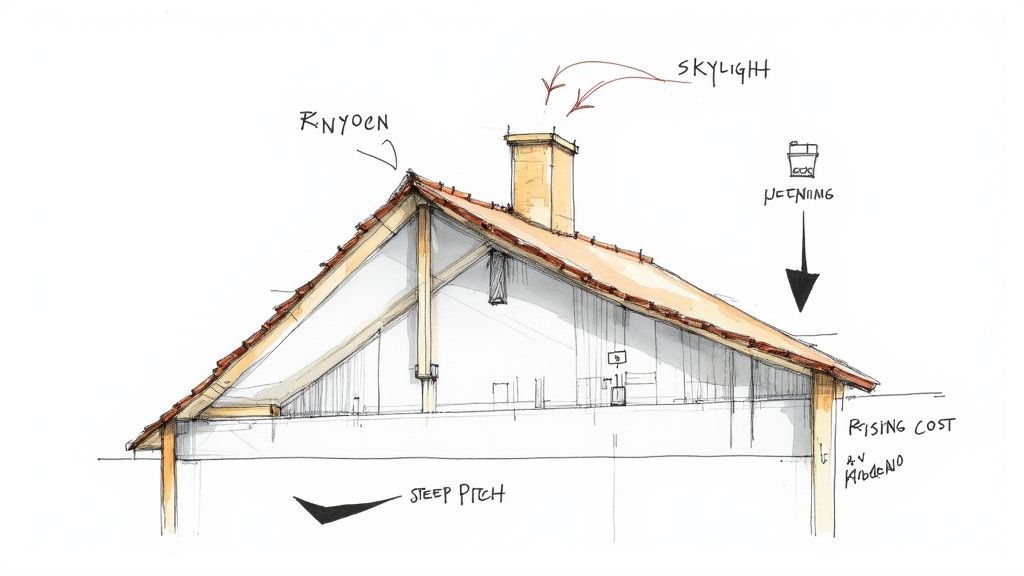
How complicated your roof's shape is happens to be one of the biggest cost drivers there is. A steep pitch means more safety gear and slower, more careful movement, and that piles on labor hours. It's just physics, and keeping the crew from sliding off.
And every feature that breaks up the flat planes of your roof adds to the bottom line. Each one needs careful cutting, sealing, and flashing to keep water out.
The usual culprits:
- Chimneys: They need detailed flashing to seal up tight where the roof meets the brick.
- Skylights: Same deal as chimneys. Get the flashing even a little wrong and they'll leak on you.
- Dormers and valleys: Anywhere two roof planes meet, you get more cuts, more wasted material, and a real jump in labor.
The Surprise Underneath: Rotten Decking
The biggest wildcard in any re-roof is the wood decking hiding under your old shingles. There's no way to really know its condition until the old roof comes off. If the crew pulls up the shingles and finds wood that's soft, spongy, or flat-out rotten, it has to be replaced. No way around it.
This one's not optional. Lay a brand-new roof over rotten decking and you're asking for trouble, plus you'll void just about any manufacturer's warranty out there. A couple bad boards might be a few hundred bucks. Widespread rot can easily tack on $1,000 or more. Hands down, this is the number one reason a final bill comes in over the estimate. If the damage turns out to be bad, our guide on professional roof repair in Tucson can help you think it through.
Your decking is the wild card in the budget, plain and simple. Always keep a cushion, usually 10-15% of the total, set aside for exactly this kind of surprise.
Regional and Market Influences
And where you live matters a lot. Wages, permit costs, even what materials are in stock swing hard from one region to the next. A roofer in a pricey city charges more for labor than one out in a small town. That's just how it goes.
All those local quirks add up to a big number, with the worldwide roofing market headed toward $306 billion, shaped by what people need and what it costs where they are. If you want the deeper data on where the trade is heading, there's plenty over at TheBusinessResearchCompany.com.
Smart Ways to Budget and Pay for Your New Roof
Knowing what a new roof runs is one thing. Figuring out how to actually pay for it is the next mountain to climb. The way you make a big expense feel manageable is with a plan, and step one is always the same: get a few detailed quotes from solid local roofers.
This isn't just hunting for the cheapest bid. Lining up estimates shows you the fair rate for your area and helps you catch the red flags, like a number that's so low it can't be real. A proper quote breaks out every line, materials, labor, permits, dumpster, so you know exactly what you're buying.
Creating Your Financial Strategy
Once you've got a real number, you can figure out how to cover it. Truth is, most people don't pay for a roof with cash sitting in the bank. They finance it and spread the cost out, which makes the whole thing a lot easier to swallow.
The usual routes people take:
- Home Equity Line of Credit (HELOC): A popular one. You borrow against the equity in your home. The rates usually beat other loans, but keep in mind your house is the collateral.
- Personal loan: An unsecured loan from a bank or credit union. Rates run a bit higher, but your home isn't on the hook if things go sideways.
- Contractor financing: A lot of roofers partner with lenders and offer financing right there. Super convenient. Just read the fine print and compare the rate and terms against everything else.
A new roof is real money going into your home's protection and its value. Treat the financing with the same care you put into choosing shingles. Compare what's out there, read the terms, and pick the option that fits your finances best.
When Homeowners Insurance Can Help
There are times your homeowners insurance steps in and covers a big piece of the replacement. It almost always comes down to sudden, accidental damage, the kind people call an "act of God."
Your policy is built to help with damage from stuff like:
- Hailstorms
- Tornadoes or severe high winds
- A tree falling on your house
- Fire
What they won't touch is a roof that's just old and worn out from age or no upkeep. If you think a storm or some other covered event wrecked your roof, call your insurance company first and open a claim. They'll send an adjuster out to look it over and decide what they'll pay toward a repair or a full replacement.
You're staring at a leak stain on the ceiling, or you find a few shingles in the yard after a windstorm, and the same question always comes up. Can I get by with a patch, or is it time for a whole new roof?
How you answer that is one of the biggest things driving your budget. A full replacement is a major spend. A simple repair isn't even close.
Repair versus replace really is just math. A couple of isolated problems are worth fixing. But once the deck, the underlayment, and the flashing are all going at the same time, you'll spend more chasing repairs than you would on a new roof.
When a Targeted Repair Makes Sense
On a younger roof with one specific problem, a repair is almost always the smart, cheaper move. If your roof's under 10-15 years old with plenty of life left, fix the spot and move on.
Lean toward "repair" if you've got something like:
- A few cracked or missing shingles the last storm took.
- A small leak around a pipe vent or chimney that new flashing will solve.
- Damage that's clearly stuck in one little area and isn't spreading.
A straightforward repair runs around $750 on average. It can swing from a couple hundred bucks to north of two thousand depending on what's actually wrong. Here's the thing to watch, though. With labor still tight and materials backed up, stringing together one small repair after another adds up fast, in money and in headaches. There's more on where industry costs are heading over at SunSent.com.
Clear Signs You Need a Full Replacement
Sometimes a repair is just a band-aid on something a lot worse. When the roof's core is shot, a full replacement is the only call that makes sense.
A full replacement is money spent ahead of trouble, on your home's safety and its value. Yeah, the upfront cost is steeper. But it ends the cycle of patch after patch and buys you decades of a roof you don't have to think about.
Problems all over the roof tell you the whole system is giving out. Shingles curling, buckling, or shedding their sandy granules across several sections? Start planning a replacement. Leaks that keep popping up somewhere new every storm are another bad sign.
And age is a big one too. If your roof's coming up on or past the 20-year mark, it's ripe for replacing before the real trouble starts. That's about when it makes sense to start talking about a new roof in Tucson.
Common Questions About Roof Costs
When you're staring down a roof replacement, the questions come fast. It's a big check, and you deserve straight answers. Here's the stuff homeowners ask us most when they're trying to pin down the real cost.
How Long Does a Roof Replacement Take?
On a pretty standard house, a full tear-off and replacement usually runs 1 to 3 days. But if the roof's got a lot of tricky angles, or we pull the old roof and find rotten decking, or a surprise storm rolls in, it can stretch to a week or more.
Does a New Roof Increase Home Value?
Yep. A new roof is a real selling point and it bumps your home's value, no question. You probably won't get every dollar back at sale, but it takes a big worry off a buyer's plate and makes the place look sharp from the curb. It helps your house stand out on the street.
A new roof is a real improvement to the house. It might not pay back dollar for dollar, but the real value is in protecting everything under it and heading off the much bigger repairs you'd be facing otherwise.
Can I Put New Shingles Over Old Ones?
You technically can, but I'd talk you out of it. A second layer piles a bunch of extra weight on the structure, and worse, it hides the problems underneath, like rotten decking you'd never see. There's a reason a full tear-off is the standard. It's the only way you end up with a roof that lasts and carries a real warranty.
Ready to get a clear, honest quote for your roofing project? The owner-led team at Sunrise Roofers LLC provides detailed, line-item estimates with no surprises. Visit our website to schedule your free, photo-documented inspection today: https://roofwithsunrise.com
Need roofing services in Tucson? Request a free inspection or call 520-753-1758. Related pages: Roof Repair · Roof Replacement · Service Areas.
Published by Sunrise Roofers LLC
Licensed & Insured Roofing Contractor · Tucson, AZ